
For most Benchmade owners, the Work Sharp Guided Field Sharpener offers the best balance of control, size, and edge care.
A Benchmade knife can feel dull after hard use, even when the blade still looks perfect. Maybe your Bugout struggles with cardboard, your Adamas feels rough on rope, or your kitchen blade slips on food. The right sharpener can bring back that clean bite without removing too much steel. I tested the key features that matter most, including angle control, abrasive type, portability, serrated-edge support, and ease of use. This guide helps you choose the best knife sharpener for Benchmade knives without risking a fine edge.
Work Sharp Folding Field Sharpener

The Work Sharp Folding Field Sharpener is a strong match for Benchmade owners who want one small tool for quick edge care. Its folding body protects the sharpening surfaces in a pocket, pack, or tool drawer. The compact design also makes it easy to carry with a Bugout, Griptilian, or outdoor folder. I like that it supports both edge repair and light maintenance.
This sharpener uses more than one sharpening surface, so you can choose a suitable level of work. The guided format helps reduce wild angle changes, which is important on a premium Benchmade blade. It can also handle basic serration touch-ups, although a full serrated restoration takes patience. For many users, this is the best knife sharpener for Benchmade knives when portability matters most.
Pros:
- Folding design protects the abrasive surfaces
- Easy to carry for camping, work, and travel
- Useful for quick touch-ups and small repairs
- Offers better angle control than a plain sharpening rod
- Works with many straight and partially serrated blades
- Good fit for Benchmade folding knives
Cons:
- Small surfaces require slower strokes on wide blades
- Not as fast as a powered sharpener for major damage
- New users still need to learn light, even pressure
4-in-1 Kitchen Knife Sharpener
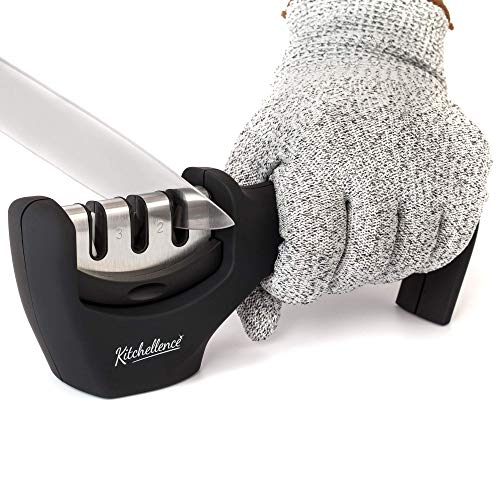
This 4-in-1 sharpener is aimed at home users who want a simple station for common kitchen and utility blades. Its multi-stage layout is designed to repair, restore, and polish an edge. The included cut-resistant glove adds a useful safety touch for people who are new to sharpening. It is larger and more home-friendly than a pocket field sharpener.
I would use this tool for a broad Benchmade kitchen knife or a general utility blade, rather than for delicate precision work. Multi-stage sharpeners can remove steel quickly, so I recommend starting with the finest suitable stage. Keep the blade steady and avoid repeated passes when the edge already feels sharp. This option may suit shoppers seeking the best knife sharpener for Benchmade knives at a low entry price.
Pros:
- Three-stage process supports repair and polishing
- Simple layout helps beginners get started
- Includes a cut-resistant glove
- Useful for many straight-edge kitchen knives
- Stable hand-held format for home use
- Usually costs less than guided precision systems
Cons:
- Less precise than a true angle-guided system
- May remove more metal than needed during frequent use
- Not my first choice for premium narrow or recurved edges
Work Sharp Guided Field Sharpener

The Work Sharp Guided Field Sharpener remains one of the most practical choices for a Benchmade owner. It combines guided abrasive surfaces, a ceramic rod, and a small section for serrations in one compact tool. The built-in guides help you keep a repeatable angle from heel to tip. That repeatability matters more than speed when you care about a factory-style edge.
I find this model especially useful for outdoor knives that see mixed work. You can repair a tired edge, refine it, and then hone it with lighter pressure. The ceramic surface helps clean up the burr after coarse work, while the rod reaches the curved parts of serrations. If I had to name one all-around pick, this would be my best knife sharpener for Benchmade knives for field and home use.
Pros:
- Built-in guides support consistent sharpening angles
- Compact enough for a pocket or field bag
- Includes coarse, fine, and ceramic surfaces
- Useful serration rod adds versatility
- Works well for routine edge maintenance
- Does not need water, oil, batteries, or a power cord
Cons:
- Small size can make long blades take more time
- Angle guides do not replace careful technique
- Heavy damage may need a larger sharpening system
AIERLIAN Rolling Knife Sharpener

The AIERLIAN rolling sharpener takes a different path from a pocket stone or pull-through tool. A magnetic holder keeps the knife in place while the abrasive wheel rolls along the edge. Its listed 15- and 20-degree settings give users a clear starting point for many kitchen and outdoor blades. The rolling motion can feel natural for someone who struggles to hold a stone at one angle.
Benchmade models do not all use the same edge geometry, so I would confirm the recommended angle for your exact knife before sharpening. Start with light pressure and make a few passes rather than forcing the wheel. The diamond side can help with an edge that needs more work, while the ceramic side suits refinement. This is a good candidate for the best knife sharpener for Benchmade knives if you prefer guided rolling control.
Pros:
- Rolling design makes angle control more approachable
- Magnetic support helps hold the knife steady
- Offers 15- and 20-degree angle choices
- Diamond and ceramic surfaces cover different tasks
- Useful for kitchen and outdoor blades
- Visual design makes the sharpening process easy to follow
Cons:
- Magnetic holding force may not suit every blade shape
- Rolling tools need a flat, clean work surface
- Not ideal for serrations, recurve edges, or unusual profiles
AccuSharp Knife Sharpener

The AccuSharp Knife Sharpener is built for speed and simple operation. Its ergonomic handle gives you a firm grip while the sharpening head passes over a straight or serrated edge. It is small enough for a kitchen drawer, tackle box, or workbench. For a user who does not want to learn stone sharpening, the low learning curve is appealing.
I would reserve this style for occasional restoration rather than daily refinement of a high-end Benchmade. Pull-through carbide sharpeners can work quickly, but they may remove more metal than a fine guided stone. Use only gentle pressure and stop as soon as the edge returns. It can be the best knife sharpener for Benchmade knives for a budget buyer who values speed over maximum control.
Pros:
- Very easy to use with a short learning curve
- Comfortable handle improves grip and control
- Compact body stores almost anywhere
- Can address straight and serrated knives
- Useful for quick household touch-ups
- Does not require electricity or setup time
Cons:
- Offers less angle control than guided systems
- Pull-through action may remove excess steel
- Not ideal for careful edge reprofiling
Hard Travel Case for Work Sharp

This hard travel case is not a sharpener by itself. It is a protective storage option made for carrying a compatible Work Sharp or Benchmade field sharpener. The firm shell helps shield the tool from dirt, bumps, and loose gear inside a pack. A case like this can prevent a good sharpener from becoming damaged before you need it.
I see the most value here for hikers, guides, hunters, tradespeople, and anyone who keeps sharpening gear in a truck. It also helps keep abrasive surfaces away from keys, food, and other items. Check the case dimensions and compatibility before ordering because not every Work Sharp model has the same shape. As an accessory, it supports the long-term value of the best knife sharpener for Benchmade knives.
Pros:
- Protects a field sharpener during transport
- Helps keep abrasive surfaces clean
- Useful for outdoor packs and tool bags
- Reduces damage from drops and loose equipment
- Provides more organized storage
- Good add-on for frequent travelers
Cons:
- Does not sharpen a knife on its own
- Must match the size of your sharpening tool
- Adds bulk compared with carrying a sharpener alone
Work Sharp Guided Field Sharpener Elite

The Guided Field Sharpener Elite is designed for users who want a more complete portable sharpening kit. It includes a case and several surfaces for different stages of edge work. The guided format helps you repeat the same angle instead of relying only on wrist memory. That makes it a strong upgrade for someone who has outgrown a basic pull-through sharpener.
This model makes sense for a Benchmade owner who carries a knife often but still wants a refined edge. Use the coarser surface only when needed, then move to finer surfaces with lower pressure. A final ceramic pass can improve the feel of a clean edge, but it should not replace safe cutting tests. If you want premium portability, this may be the best knife sharpener for Benchmade knives in the field-sharpener class.
Pros:
- More complete sharpening setup than a basic pocket tool
- Guided angle format supports repeatable results
- Includes a protective travel case
- Suitable for repair, sharpening, and honing
- Useful for serious outdoor knife users
- Portable without needing power or water
Cons:
- Costs more than simple hand sharpeners
- Requires practice to use each abrasive correctly
- May feel larger than needed for occasional home touch-ups
Work Sharp Benchtop Whetstone Sharpener

The Work Sharp Benchtop Whetstone Sharpener suits people who sharpen at home and want a stable platform. Its benchtop format is easier to control than a loose stone held in one hand. It can serve kitchen knives, pocket knives, and many edged tools. The fixed base also helps reduce movement while you learn how much pressure to use.
Whetstone-style sharpening rewards patience. You need to keep the blade at the correct angle and use smooth strokes across the abrasive surface. This tool is better for careful maintenance than a rushed field repair. For a Benchmade owner who enjoys hands-on sharpening and wants a home station, it is a serious contender for the best knife sharpener for Benchmade knives.
Pros:
- Stable benchtop format improves control
- Works with kitchen, pocket, and utility knives
- Encourages careful steel removal
- Good choice for learning manual sharpening
- Suitable for regular home maintenance
- More comfortable than holding a loose stone
Cons:
- Less portable than field sharpeners
- Manual technique still affects the final edge
- May require more cleaning and setup than a pull-through tool
Precision Adjust Three-Stage Sharpener
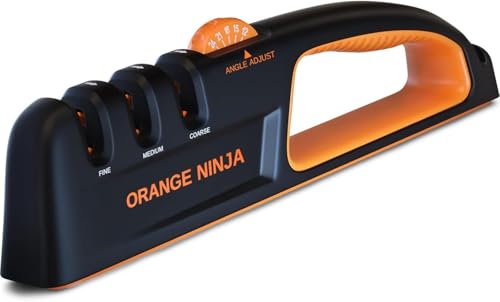
The Precision Adjust sharpener is built for users who want more control than a simple handheld tool provides. Its guided structure helps hold the blade and maintain a selected angle through the sharpening process. The three-stage design lets you begin with repair work and finish with refinement. This format can produce a more even bevel when the user takes time with each step.
I would choose this type of system for a Benchmade owner who wants repeatable home results but does not want a large professional rig. It can be especially useful when restoring a knife that has developed an uneven edge from years of casual sharpening. Start with the least aggressive stage that solves the problem. In my view, it is among the best knife sharpener for Benchmade knives options for controlled home work.
Pros:
- Guided design helps maintain a steady angle
- Three stages cover repair and edge finishing
- Good fit for repeatable home sharpening
- Less wrist strain than freehand stone work
- Useful for users with limited sharpening experience
- Can restore an uneven edge with careful use
Cons:
- Less convenient to carry than a field sharpener
- Setup takes longer than a pull-through model
- Clamps and guides require careful blade placement
AccuSharp Gourmet Series 15-Degree Sharpener

The AccuSharp Gourmet Series uses a listed 15-degree angle for knives designed around a fine cutting edge. It has diamond-honed tungsten carbide blades that can hone and refine compatible straight or serrated knives. The hand-held body is compact, so it fits well in a kitchen drawer or small work area. Its reversible blades may also help extend service life through normal use.
This model can suit a Benchmade kitchen knife or another blade that matches its angle needs. However, Benchmade knives vary by model, steel, and factory edge, so I would not assume 15 degrees fits every folder. Use light pressure and check the result often. For the right blade, this can be the best knife sharpener for Benchmade knives when a fast 15-degree touch-up is the main goal.
Pros:
- Designed around a clearly listed 15-degree angle
- Diamond-honed tungsten carbide elements sharpen quickly
- Reversible blades may extend product life
- Compact hand-held design saves storage space
- Supports straight and serrated knife maintenance
- Simple choice for routine kitchen use
Cons:
- 15 degrees may not match every Benchmade model
- Hand-held format gives less control than a guided kit
- Fast carbide sharpening can remove excess steel
My Recommendation
After comparing these products, I would choose the Work Sharp Guided Field Sharpener for most Benchmade owners. It gives you angle guidance, several useful surfaces, serration support, and a compact body. It also encourages a gentle maintenance habit instead of aggressive sharpening. That balance makes it a safe and practical best knife sharpener for Benchmade knives for camping, work, and home use.
Choose the Folding Field Sharpener if you want a newer compact option with protected surfaces. Pick the Precision Adjust system or Benchtop Whetstone model if you sharpen at home and want more control. The AccuSharp models suit quick touch-ups, while the travel case protects compatible gear. Before sharpening, confirm your Benchmade model’s edge angle and always begin with light pressure.
| Best for | Why |
|---|---|
| Most Benchmade owners | The Work Sharp Guided Field Sharpener balances angle control, portability, and versatility. |
| Home precision sharpening | The Precision Adjust and Benchtop Whetstone models provide a steadier setup. |
| Fast basic touch-ups | AccuSharp models work quickly and store easily, though they offer less control. |
How I Chose the Best Knife Sharpener for Benchmade Knives
I looked at the parts that affect real edge care, not just product names. A good sharpener should match the knife’s edge angle, steel type, blade shape, and intended use. I also considered how much control the user gets over pressure and motion. Premium Benchmade knives deserve more care than a rushed pass through a harsh sharpener.
Angle control came first. A sharpener that helps you repeat the same angle can protect the blade from an uneven bevel. Abrasive strength came next because coarse diamond or carbide surfaces can fix damage but can also remove steel quickly. I also checked portability, safety, serration support, cleaning needs, and the learning curve.
I do not treat a low price as proof of poor quality, and I do not treat a high price as proof of better sharpening. The best knife sharpener for Benchmade knives is the one that fits your skill and your knife. A hunter needs a different tool from a home cook. A collector may value gentle control more than speed.
What Angle Should You Use on a Benchmade Knife?
There is no single angle for every Benchmade knife. The correct setting depends on the model, blade steel, grind, and factory edge. Many modern folding knives use a relatively fine edge, but you should check the care guide for your exact knife before changing its geometry.
When a sharpener offers 15- and 20-degree settings, do not choose by guesswork alone. A fine angle can cut well, but it may be less durable during hard impact or rough work. A wider angle can offer more strength, but it may feel less keen. Matching the existing bevel is usually the safest first step.
I also recommend marking the edge with a thin permanent marker before your first pass. Make one light stroke and inspect the ink. If the abrasive removes ink evenly at the bevel, your angle is close. This small test can prevent needless metal removal and help you find the best knife sharpener for Benchmade knives setting.
How to Sharpen a Benchmade Knife Safely
Start by cleaning the blade and checking it for chips, rolls, or deep damage. Secure the sharpener on a stable surface when possible. If you use a pocket tool, hold it firmly and keep your fingers behind the sharpening path. Never rush because a moving blade can slip when you press too hard.
Use the coarsest abrasive only when the edge needs repair or major sharpening. For a dull but undamaged blade, begin with a medium or fine surface. Make controlled passes from the heel toward the tip, following the curve of the edge. Do not saw back and forth unless the sharpener’s instructions specifically allow that motion.
Use less pressure as the edge improves. A light final pass helps remove the small burr that forms during sharpening. Test the edge on paper or a soft food item, not on your finger. After use, wipe away metal dust and store the sharpener in a dry place.
Diamond, Ceramic, Carbide, or Whetstone?
Diamond abrasives cut hard steel quickly. They are helpful when a Benchmade blade is very dull or needs a small repair. Because they work fast, I use light pressure and fewer passes. A diamond surface is often useful in a portable field tool.
Ceramic surfaces are finer and work well for honing or final refinement. They remove less metal and can make an already sharp edge feel cleaner. Ceramic rods may also help with light serration work. They are not usually the fastest choice for a badly damaged edge.
Carbide pull-through sharpeners offer speed and a simple learning curve. They can be useful for low-cost utility knives, but I use them more carefully on premium Benchmade blades. Whetstones offer excellent control but require more practice. For many owners, a guided diamond-and-ceramic tool gives the best middle ground.
Common Mistakes to Avoid
The most common mistake is using too much pressure. Pressing hard does not make a blade sharpen faster in a useful way. It can wear the abrasive, create a rough burr, and remove more steel than needed. Let the abrasive do the work.
Another mistake is switching angles during every stroke. An inconsistent angle creates a rounded or uneven bevel. Use a guide, mark the edge, or practice with a less valuable knife first. A few calm strokes are better than many rushed strokes.
Do not sharpen a dirty or wet blade unless the tool instructions allow it. Dirt can clog a fine abrasive, while moisture can cause storage problems. Do not use a serration rod across the flat edge of a serrated Benchmade knife. Work inside each scallop instead.
FAQs Of best knife sharpener for benchmade knives
What is the best knife sharpener for Benchmade knives?
For most users, I recommend the Work Sharp Guided Field Sharpener. It offers angle guidance, multiple surfaces, portability, and serration support. The best choice can still vary by Benchmade model and how often you sharpen.
Can I use a pull-through sharpener on a Benchmade knife?
Yes, but use care. Pull-through sharpeners can remove metal quickly and may not match the knife’s factory angle. A guided sharpener or whetstone usually gives better control for a premium blade.
Are Benchmade knives sharpened at 15 degrees?
Some Benchmade knives may use an edge near that range, but models differ. Check the instructions or model guidance before selecting a 15-degree sharpener. Matching the existing bevel is safer than assuming one angle fits all.
Is a ceramic rod good for Benchmade knives?
A ceramic rod works well for light honing and final edge refinement. It is not the best tool for repairing chips or a badly rolled edge. Use light pressure and keep the rod aligned with the existing bevel.
How often should I sharpen a Benchmade knife?
Sharpen it when performance drops, not on a fixed calendar. Light honing can maintain the edge between full sharpening sessions. Cardboard, rope, food, and hard impact can all change how often maintenance is needed.
Final Verdict: Which Should You Buy?
The Work Sharp Guided Field Sharpener is my top pick because it combines control, portability, and useful abrasive stages. It is the best knife sharpener for Benchmade knives for most owners.
Choose a benchtop or precision system for home work, or an AccuSharp model for quick touch-ups. Match the angle, use light pressure, and protect your Benchmade’s edge.