
The best knife sharpener for Wusthof knives is the WÜSTHOF Precision Edge 4 Stage Knife Sharpener.
A dull WÜSTHOF knife can turn meal prep into a slow, tiring chore. Tomatoes crush, onions slide, and you press harder than you should. I tested the key features that matter most, including angle control, ease of use, safety, and edge quality. This guide compares ten useful options, from simple honing steels to full sharpening systems, so you can find the best knife sharpener for Wusthof knives and keep your blades smooth, sharp, and ready for daily cooking.
WÜSTHOF 2-Stage Hand-Held Sharpener

The WÜSTHOF 2-Stage Hand-Held Sharpener is a simple choice for cooks who want quick edge care without learning whetstone skills. Its two-stage design normally combines a coarse stage for repair and a fine stage for refining the edge. That makes it useful when a WÜSTHOF chef knife feels dull but does not have major chips or bends. The compact shape also takes little room in a kitchen drawer.
I like this style for routine home cooking because it gives clear, repeatable results. You place the sharpener on a flat surface, hold the handle, and draw the knife through the slots with light pressure. It is not as flexible as a stone, and it may remove more steel than careful hand sharpening. Still, for busy cooks, it offers a practical balance of speed, control, and cost.
Pros:
- Fast two-stage sharpening process
- Easy for beginners to use
- Compact size suits small kitchens
- Useful for routine WÜSTHOF edge care
- Stable hand-held design with a firm grip
- Does not require water or special setup
Cons:
- Less control than a sharpening stone
- Not ideal for badly damaged blades
- May remove more metal than honing
WÜSTHOF Precision Edge 4 Stage Sharpener

The WÜSTHOF Precision Edge 4 Stage Knife Sharpener is the most complete manual option in this group. Its four-stage layout gives you more steps to repair, sharpen, and polish an edge. That extra control can help when a blade has lost its bite over time. It is a strong match for WÜSTHOF owners who want a guided system instead of a freehand stone.
In my view, this model has the best mix of control and ease for most home cooks. The coarse stage can restore a tired edge, while later stages help smooth it for cleaner cuts. Use light pressure and make steady passes; pressing hard can create a rough edge or remove steel too fast. WÜSTHOF recommends careful edge maintenance, and a staged sharpener supports that habit when used with restraint.
Pros:
- Four stages cover more sharpening needs
- Good choice for dull kitchen knives
- Guided slots help keep each pass steady
- Fine stages can improve cutting feel
- Simple enough for regular home use
- Well suited to WÜSTHOF kitchen knife sets
Cons:
- Takes longer than a two-stage model
- Costs more than a basic hand sharpener
- Needs careful pressure control
WÜSTHOF Universal 4-Stage Sharpener

The WÜSTHOF Universal 4-Stage Knife Sharpener is made for cooks who want one tool for several edge tasks. A four-stage system can give a knife more than a quick touch-up. It may help repair a dull edge, sharpen it, and finish it with a smoother feel. The universal design also makes it useful when your drawer contains knives from more than one brand.
I see this as a flexible option for a mixed kitchen. You can use it on common kitchen blades, but you should always check the instructions before sharpening specialty knives. A guided sharpener cannot replace a skilled repair service when the edge has deep chips or a bent tip. For normal wear, though, it offers a neat process that most users can learn in minutes.
Pros:
- Four stages offer broad edge care
- Useful for mixed knife collections
- Beginner-friendly guided design
- Can handle routine repair and polishing
- Reduces the need for several separate tools
- Good fit for home cooks who value convenience
Cons:
- Universal use still requires care
- May not suit every specialty blade
- Has a larger footprint than a basic sharpener
WÜSTHOF Knife Sharpener

This WÜSTHOF Knife Sharpener is a straightforward pick for users who dislike complex gear. It is designed to refresh a kitchen knife without the setup linked to stones or electric machines. The compact body makes it easy to keep near a prep area. It can be a good match for a WÜSTHOF owner who wants a brand-matched tool for regular care.
The key is to use gentle, even strokes and stop once the edge feels sharp. Repeated passes after the knife is already sharp can wear the blade for no benefit. I would choose this model for light to medium dullness, not for a knife with a broken tip or large chip. Its appeal comes from quick use and simple storage rather than advanced sharpening control.
Pros:
- Simple design for new users
- Quick to use before meal prep
- Compact and easy to store
- Brand-matched option for WÜSTHOF owners
- Works well for routine touch-ups
- Requires no soaking or stone flattening
Cons:
- Limited control over the exact edge
- Not the best tool for major damage
- May not replace a full sharpening system
WÜSTHOF 9-Inch Honing Steel

The WÜSTHOF 9-Inch Honing Steel is different from a true sharpener. It mainly helps realign a knife edge that has rolled slightly during normal use. That makes it valuable for maintaining a sharp WÜSTHOF blade between full sharpening sessions. The nine-inch length suits many chef knives, utility knives, and other common kitchen blades.
I often suggest a honing steel to cooks who already own a sharpening tool. It can make a knife feel more responsive without grinding away much material. Hold the steel securely, keep the motion slow, and avoid dramatic swinging strokes. The American Knife and Tool Institute explains that safe knife care depends on controlled handling, and this tool rewards calm technique.
Pros:
- Excellent for regular edge maintenance
- Helps realign a slightly rolled edge
- Removes little metal when used correctly
- Nine-inch length suits many kitchen knives
- Easy to clean and store
- Useful between full sharpening sessions
Cons:
- Will not sharpen a very dull blade
- Requires practice for safe, even strokes
- Less useful on severely damaged edges
4-in-1 Three-Stage Knife Sharpener
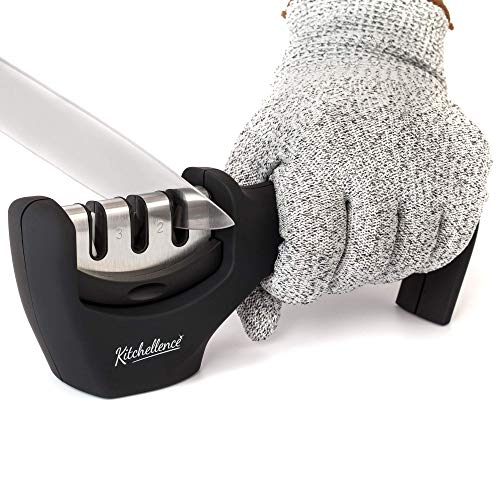
This 4-in-1 kitchen accessory set combines a three-stage knife sharpener with extra safety gear. The sharpener is built to support repair, restoration, and polishing in separate steps. That layout can help a user understand the difference between fixing a dull edge and finishing a sharp one. The included cut-resistant glove may also give nervous beginners more confidence.
I would treat the glove as an added safety aid, not a reason to ignore knife rules. Keep the sharpener on a stable counter and keep your free hand away from the blade path. The set can suit a budget-minded cook who needs a full starter kit. It may not provide the same brand fit or long-term refinement as a WÜSTHOF system, but it offers useful value for basic home tasks.
Pros:
- Three sharpening stages in one tool
- Includes a cut-resistant glove
- Helpful starter set for new cooks
- Can repair and polish common kitchen blades
- Offers several functions at a low entry point
- Simple choice for occasional sharpening
Cons:
- Glove does not prevent every injury
- Brand and angle fit may vary by knife
- Build quality may not match premium tools
WÜSTHOF Electric Easy Edge Sharpener
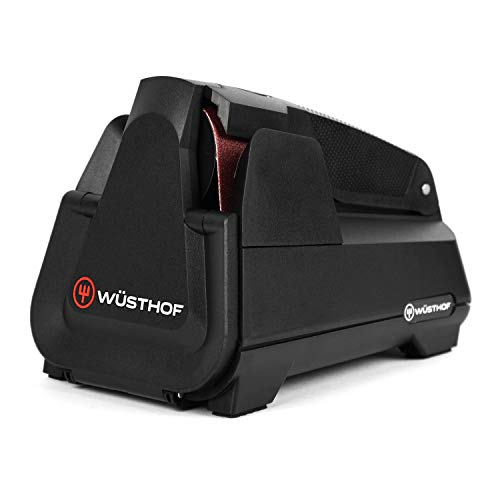
The WÜSTHOF Electric Easy Edge Sharpener is made for people who want speed and minimal hand work. An electric sharpener guides the blade through powered abrasive wheels, which can save time during a busy cooking week. It is especially appealing to users who feel unsure about holding a stone at a steady angle. The black housing also fits neatly with most modern kitchen tools.
Electric power does not mean you should rush. Use the correct slot, follow the maker’s instructions, and let the abrasive do the work. Too much pressure can remove metal quickly and create heat or an uneven edge. I recommend this option for convenience-focused cooks who want the best knife sharpener for Wusthof knives without a long learning curve.
Pros:
- Very quick and easy to operate
- Good choice for users with limited hand control
- Guided powered slots reduce manual effort
- Useful for regular kitchen knife upkeep
- Convenient for busy households
- Recognizable WÜSTHOF brand design
Cons:
- Requires access to a power outlet
- Can remove steel quickly if misused
- Less quiet than a manual sharpener
- May cost more than basic hand tools
WÜSTHOF 10-Inch Sharpening Steel

The WÜSTHOF 10-Inch Sharpening Steel gives you a longer surface than the nine-inch model. That extra length can feel helpful when you maintain a large chef knife or a longer slicing blade. Like other honing steels, it is mainly for alignment and upkeep, not for restoring a truly blunt edge. It belongs in the kitchen of anyone who wants to keep a sharpened knife working well.
I find a longer steel easier to use when the blade is close to its full length. It lets you make one smooth pass instead of stopping near the tip. Beginners should still start slowly and keep the steel in a stable position. Pair it with a proper sharpener, because honing alone cannot replace abrasive sharpening.
Pros:
- Long surface suits larger kitchen knives
- Helps maintain an existing sharp edge
- Useful for quick pre-cooking touch-ups
- Needs no electricity or water
- Durable, simple kitchen tool design
- Removes little material during proper use
Cons:
- Does not fix a fully dull blade
- Needs correct technique and control
- May feel large for short knives
WÜSTHOF Gourmet Tri-Stone Sharpener

The WÜSTHOF Gourmet Tri-Stone Sharpener is aimed at cooks who want a more hands-on sharpening method. A tri-stone system uses multiple surfaces to move from a rougher stage toward a finer finish. This approach gives you more control than a fixed-slot sharpener. It can also help you learn how an edge changes as you sharpen it.
The trade-off is time and technique. You need to follow the care instructions, use steady pressure, and keep the blade angle consistent. I would choose this model for a patient cook who enjoys maintaining tools and wants a refined edge. It is less convenient than an electric model, but the hands-on process can feel rewarding and precise.
Pros:
- Offers a hands-on sharpening experience
- Multiple surfaces support staged edge work
- Gives users more control than fixed slots
- Can suit serious home cooks
- Useful for learning sharpening technique
- Supports a smooth finishing process
Cons:
- Requires more practice than guided tools
- Sharpening takes longer
- Needs careful cleaning and storage
- May not suit users seeking instant results
WÜSTHOF 9-Inch Triple Rivet Honing Steel

The WÜSTHOF 9-Inch Triple Rivet Honing Steel focuses on daily blade maintenance. Its nine-inch size works well for many standard chef knives and utility blades. A honing steel helps bring a slightly misaligned edge back into line after cutting on a board. That can make a cared-for WÜSTHOF knife feel sharp again without a full grinding session.
The triple-rivet handle detail gives this model a traditional kitchen-tool look and a secure feel in the hand. I would use it before cooking when the knife cuts well but feels a little rough. If the blade will not slice paper or produce clean cuts after honing, switch to an abrasive sharpener. This steel is a partner to the best knife sharpener for Wusthof knives, not a complete replacement.
Pros:
- Good for frequent edge alignment
- Compact nine-inch working length
- Classic handle with secure hand feel
- Helps extend time between sharpening sessions
- Simple to use once technique is learned
- Works without power or water
Cons:
- Cannot repair chips or broken tips
- Does not sharpen a fully blunt edge
- Requires safe handling and steady motion
My Recommendation
After comparing these options, I would choose the WÜSTHOF Precision Edge 4 Stage Knife Sharpener for most WÜSTHOF owners. It gives a useful path from repair to polish while keeping the process simple. It is the best knife sharpener for Wusthof knives for cooks who want more control than a basic two-stage tool but less work than freehand stones.
Choose the WÜSTHOF 2-Stage Hand-Held Sharpener if you want fast, simple maintenance. Pick the electric Easy Edge model if hand control is difficult or time is short. For daily upkeep, add a nine-inch or ten-inch honing steel. Remember that a honing steel realigns an edge, while an abrasive sharpener removes a small amount of metal to create a new edge.
| Best for | Why |
|---|---|
| Most home cooks | The WÜSTHOF Precision Edge 4 Stage offers guided repair, sharpening, and polishing. |
| Fast daily touch-ups | The WÜSTHOF 9-Inch Honing Steel realigns an edge with little material loss. |
| Easy powered sharpening | The WÜSTHOF Electric Easy Edge reduces hand effort and saves time. |
Before buying, check the current Amazon listing for price, stock, and product details. Product packaging and availability can change during 2026. I also recommend reading the care guide for your exact WÜSTHOF knife, since blade shape, edge type, and use can affect the right sharpening method.
How I Chose the Best Knife Sharpener for Wusthof Knives
I judged each option by the needs of a real home kitchen. A useful sharpener should improve cutting performance without making the process confusing. I looked at edge control, ease of use, safety, storage, speed, and the difference between sharpening and honing.
WÜSTHOF knives commonly use a fine, narrow edge designed for clean kitchen cuts. The exact angle can vary by product line and production details, so I do not advise forcing a blade into a slot that does not match its instructions. The WÜSTHOF care guidance is the best first reference for your knife.
I also considered the condition of the blade. A knife that feels slightly rough may only need honing. A knife that slides across a tomato needs sharpening. A knife with a chip, bent tip, or uneven heel may need professional repair rather than repeated passes through a home tool.
Sharpener Types Explained
Manual Pull-Through Sharpeners
Manual pull-through models use fixed slots to guide the blade. They are fast and simple. They suit people who want a clear routine with little setup. The main risk is excess pressure, which can remove too much steel and shorten the useful life of a fine knife.
Electric Sharpeners
Electric models use powered wheels or belts. They save hand effort and can produce quick results. They also work fast, so careful use matters. Follow the instructions and never push the blade hard into the slot.
Honing Steels
A honing steel does not work like a grinding sharpener. It helps straighten a slightly rolled edge. Use it when the knife is still fairly sharp but does not glide through food as cleanly as before. A steel cannot rebuild an edge that has worn away.
Tri-Stone Systems
Stone systems give more control and can produce excellent results. They need a steady angle, light pressure, and good care. They are a fine choice for cooks who enjoy the craft of knife care. They are not the fastest choice for a person who wants a sharp knife in two minutes.
How to Sharpen a WÜSTHOF Knife Safely
Start by cleaning and drying the knife. Place a manual sharpener on a firm, flat counter. Keep your fingers away from the blade path, and hold the handle as the instructions show. Use slow passes from the heel toward the tip rather than fast, forceful strokes.
Do not press down hard. The abrasive surface should do the work. Wipe the blade after sharpening to remove fine metal dust, then test it on a soft food such as a tomato or onion. Never test sharpness by sliding a finger across the edge.
For a honing steel, hold the steel with the tip on a stable board if that feels safer. Move the knife in a controlled path and keep both hands clear of the edge. Store the knife in a block, sheath, or magnetic rack instead of tossing it loose in a drawer.
How Often Should You Sharpen a WÜSTHOF Knife?
The answer depends on how often you cook and what you cut. A home cook may need a full sharpening every few months. A busy cook may need it more often. Use a honing steel between sessions when the edge begins to feel slightly uneven.
Do not sharpen by a calendar alone. Let performance guide you. If the knife crushes food, slips on the skin of a tomato, or needs extra force, it likely needs attention. If it still cuts well, more sharpening only removes metal without adding a useful benefit.
Common Buying Mistakes to Avoid
Choosing Speed Over Control
The fastest tool is not always the best tool. A very aggressive sharpener may restore a dull edge but remove more steel than needed. For an expensive WÜSTHOF knife, gentle and controlled care often makes more sense.
Using a Honing Steel on a Dull Knife
Honing cannot replace sharpening. It can realign a rolled edge, but it cannot create new cutting steel. If honing does not improve the knife, move to a proper abrasive sharpener.
Ignoring the Knife Instructions
WÜSTHOF makes several knife lines. Some blades may have different shapes, coatings, or edge designs. Check the instructions for your exact model before using a sharpener. When in doubt, use a less aggressive method or ask a qualified knife service.
Applying Too Much Pressure
Heavy pressure feels like it should work faster, but it often creates poor control. Light pressure gives the abrasive time to contact the edge evenly. It also reduces the chance of scratching or damaging the blade.
FAQs Of best knife sharpener for wusthof knives
What is the best knife sharpener for Wusthof knives?
The WÜSTHOF Precision Edge 4 Stage Knife Sharpener is my top overall pick. It offers guided stages for repair, sharpening, and finishing. It suits most home cooks who want control without learning freehand stone work.
Can I use an electric sharpener on a WÜSTHOF knife?
Yes, but check the instructions for your knife and the electric sharpener first. Use the correct slot and light pressure. Stop when the edge is sharp rather than making extra passes.
Is a WÜSTHOF honing steel the same as a sharpener?
No. A honing steel mainly realigns a slightly rolled edge. A sharpener uses an abrasive surface to remove a small amount of metal and form a new edge.
What angle should I use for a WÜSTHOF knife?
The correct angle can vary by knife line. Many WÜSTHOF kitchen knives use a fine edge, but you should confirm the angle in the care instructions for your exact model. A guided WÜSTHOF sharpener can reduce guesswork.
How can I tell when my WÜSTHOF knife needs sharpening?
If the knife slips on tomatoes, crushes herbs, or needs extra force, it likely needs sharpening. If it only feels slightly rough but still cuts well, try honing first.
Final Verdict: Which Should You Buy?
I recommend the WÜSTHOF Precision Edge 4 Stage Knife Sharpener for most cooks. It gives the best balance of control, ease, and edge care.
For fast maintenance, pair it with a honing steel. This combination is a practical best knife sharpener for Wusthof knives solution for a sharp, safe, and ready kitchen blade.