
Yes. Cover corned beef with water, broth, or another cooking liquid in a slow cooker. The liquid should reach about halfway to two-thirds up the brisket, or nearly cover it if the cut fits well. You do not need to fully submerge the meat.
For a typical U.S. grocery-store corned beef brisket, add the meat fat-side up, season it with the included spice packet, and cook it on LOW for about 8 to 10 hours, depending on its size and your slow cooker. The brisket is ready when it is fork-tender and reaches a safe internal temperature.
The liquid helps create a moist cooking environment. However, a slow cooker loses little moisture, so adding too much water can dilute the flavor and leave you with watery cooking juices.

How Much Water Should You Add to Corned Beef?
Add enough liquid to come about halfway to two-thirds up the brisket. If the brisket is small and the slow cooker is narrow, the liquid may nearly cover it. That is fine, but the meat does not need to float or sit fully underwater.
Use this simple guide:
| Brisket size | Suggested liquid |
|---|---|
| 2 to 3 pounds | 2 to 3 cups |
| 3 to 4 pounds | 3 to 4 cups |
| 4 to 5 pounds | 4 to 5 cups |
These amounts are starting points, not strict rules. The shape of the brisket and the size of the slow cooker matter more than the exact cup measurement.
Use less liquid if the brisket sits snugly in the pot. Use more if the slow cooker is wide and the liquid barely reaches the meat. Keep the liquid below the slow cooker’s maximum fill line.
Should the water cover the corned beef completely?
No. Complete coverage is not required. The slow cooker traps steam under the lid, while the liquid gently simmers around the meat. This creates moist heat even when the top of the brisket sits above the liquid.
If you fully submerge the brisket, the dish may taste more like boiled corned beef. That is not unsafe, but it can produce a milder flavor and a thinner broth.
What liquid works best?
Choose a liquid based on the flavor you want:
- Water gives the most traditional, mild result.
- Low-sodium beef broth adds a deeper beef flavor.
- Chicken broth works if that is what you have.
- A mixture of water and beer adds a malty flavor.
- Apple juice can add sweetness, but use it in a small amount.
- Pickling liquid can increase the salt level quickly, so use it sparingly.
Corned beef is already cured in a salty brine. For that reason, low-sodium broth or plain water is usually the safest choice for flavor control.

How to Cook Corned Beef in a Slow Cooker
Follow these steps for a tender brisket with balanced flavor.
1. Check the brisket and its package
Remove the corned beef from its package and discard the curing liquid. Check for a spice packet. Many packaged briskets include one, but not all do.
You can rinse the brisket under cool running water if you want to reduce surface salt. Rinsing will not remove all of the salt inside the meat, but it can make the finished dish less salty.
Pat the brisket dry with paper towels. Do not soak it for hours unless the package or recipe specifically calls for desalting.
2. Add vegetables first, if using them
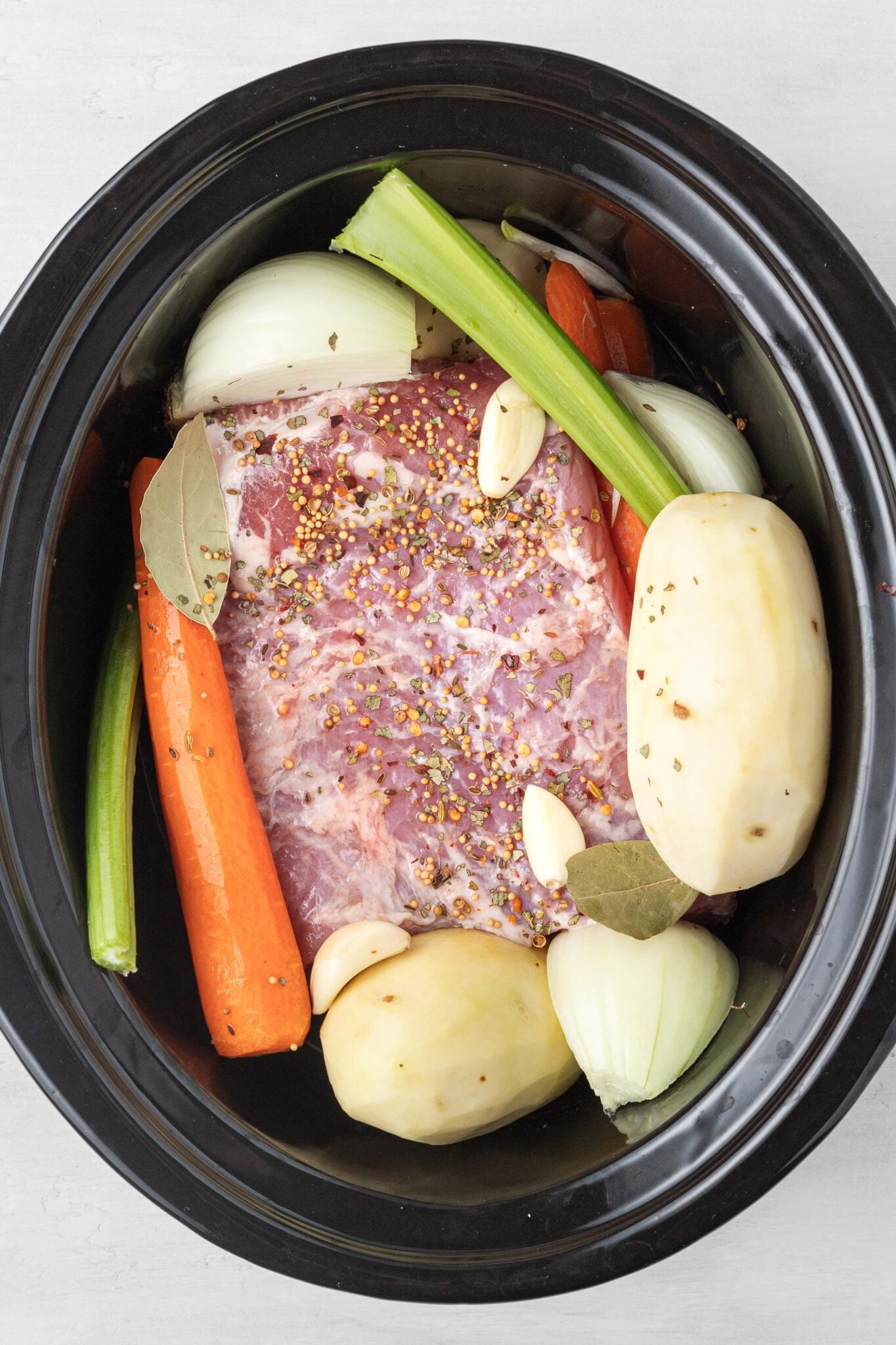
Place firm vegetables in the bottom of the slow cooker. Good choices include:
- Quartered onions
- Carrots
- Celery
- Small red potatoes
- Cabbage wedges added later
Vegetables create a base that helps lift the brisket slightly above the bottom. They also absorb some of the cooking juices.
3. Place the brisket in the cooker
Set the brisket on top of the vegetables. Place it fat-side up when possible. The fat may soften during cooking and help protect the top of the brisket from drying.
If the brisket does not fit, do not force it into the cooker. Cut it into two large pieces only if needed to fit safely. Avoid cutting it into many small chunks, which can make the meat dry and harder to slice.
4. Add the spice packet and liquid
Sprinkle the included spice packet over the brisket. Add water or broth until the liquid reaches halfway to two-thirds up the sides of the meat.
Do not add extra salt at this stage. You can adjust seasoning after cooking, but you cannot remove excess salt easily.
5. Cook on LOW
Cover the slow cooker and cook on LOW for approximately:
- 2- to 3-pound brisket: 7 to 8 hours
- 3- to 4-pound brisket: 8 to 9 hours
- 4- to 5-pound brisket: 9 to 10 hours
Slow cookers vary. Time is only a guide. The best sign of doneness is texture: a fork should slide into the thickest part with little resistance.
Avoid lifting the lid often. Each lid opening releases heat and steam and may extend the cooking time.
6. Add cabbage near the end
Add cabbage wedges during the last 1½ to 2 hours of cooking. Adding cabbage at the start can make it very soft and give the cooking liquid a strong cabbage flavor.
Potatoes and carrots can cook with the brisket from the beginning. If you prefer firmer vegetables, add them during the last 3 to 4 hours instead.
7. Rest and slice the meat
Transfer the cooked brisket to a cutting board. Let it rest for about 10 to 20 minutes before slicing.
Find the direction of the muscle fibers, called the grain. Slice across the grain, not with it. Thin slices cut across the grain are easier to chew.

What Temperature Should Corned Beef Reach?
Corned beef should reach at least 145°F in the thickest part, followed by a three-minute rest, according to the U.S. Department of Agriculture’s safe minimum temperature guidance for beef roasts.
That temperature addresses safety, but corned beef also needs enough time to become tender. Brisket contains connective tissue that softens during long, moist cooking. A brisket can be technically safe before it is pleasant to eat.
Use both temperature and texture:
- Check the thickest part with a food thermometer.
- Avoid touching the thermometer to a bone or the slow cooker.
- Test tenderness with a fork.
- Continue cooking if the meat is safe but still tough.
- Stop cooking when the brisket is tender enough to slice without falling apart.
Corned beef may become tough if you slice it too soon, cut it with the grain, or stop cooking before the connective tissue softens.

Should You Cook Corned Beef on LOW or HIGH?
LOW is usually the better setting for corned beef. It gives the brisket more time to soften and may produce a more even texture.
HIGH can work when time is limited, but cooking times vary widely by appliance and cut size. A small brisket may finish in about 4 to 6 hours on HIGH, while a larger one can take longer.
Use LOW when:
- You want a tender, sliceable brisket.
- You are cooking a large or thick cut.
- You have enough time for a long cook.
- You want vegetables to cook gently.
Use HIGH only when you can monitor the result and confirm doneness with a thermometer and tenderness check. Do not switch to HIGH simply because the meat seems tough. Toughness usually means it needs more cooking time, not more seasoning or less liquid.

What Happens If You Add Too Much Water?
Too much water will not usually ruin the brisket, but it can weaken the flavor. It may also make the broth salty, especially because corned beef releases salt during cooking.
If you added too much liquid, try these fixes:
- Remove some liquid with a ladle.
- Continue cooking with the lid on.
- Taste the broth only after the meat has cooked.
- Reduce the cooking liquid in a separate saucepan after removing the meat.
- Avoid adding salt until the final dish is ready.
Never reduce a very salty broth and expect it to become less salty. Reduction removes water and can make salt taste stronger.
What if the brisket is not covered by liquid?
That is normally fine. Add more liquid only if the bottom of the slow cooker is dry or the meat is not sitting in any moist cooking environment.
Keep the lid closed. A slow cooker is designed to trap heat and moisture. The top portion of the brisket can cook through steam and heat from the covered pot.
What if the brisket is still tough?
Keep cooking it on LOW and check it again after 30 to 60 minutes. Tough brisket often needs more time for its connective tissue to break down.
If the meat is dry and stringy, it may have cooked too long, been cut too thin, or had too little liquid around it. Adding a small amount of warm broth can help moisten sliced meat, but it will not reverse overcooking.
Should You Rinse Corned Beef Before Slow Cooking?
Rinsing is optional. It can remove some salt from the surface and wash away excess curing liquid. It does not remove the salt that has moved into the meat during curing.
Rinse the brisket under cool water if:
- The package contains a large amount of brine.
- You are sensitive to salty food.
- You plan to use broth or other seasoned liquid.
- You want a milder crust.
Skip rinsing if you prefer a stronger cured-beef flavor. Either way, avoid adding extra salt before tasting the finished dish.
Do not use warm or hot water to rinse raw meat. Keep the brisket cold until it goes into the slow cooker, and clean surfaces that contact the raw meat.

Food Safety Tips for Slow-Cooker Corned Beef
Use safe handling practices from the refrigerator to the leftovers.
- Thaw the brisket in the refrigerator, not on the counter.
- Do not place frozen corned beef in a slow cooker.
- Keep the lid on during cooking.
- Use a food thermometer to check the thickest part.
- Refrigerate leftovers within two hours.
- Store leftovers in shallow, covered containers.
- Use refrigerated leftovers within 3 to 4 days, or freeze them for longer storage.
- Reheat leftovers until hot throughout.
The USDA advises against using a slow cooker to thaw food or bring frozen meat to a safe temperature. Frozen meat may spend too long in the temperature range where bacteria can multiply.
If the slow cooker loses power for an unknown length of time, do not taste the meat to judge safety. If the food has been sitting warm for several hours, discard it when you cannot verify that it stayed at a safe temperature.

Common Mistakes to Avoid
Adding salt without tasting
Corned beef is cured before you buy it. Extra salt, salty broth, bouillon, and pickling liquid can quickly make the meal too salty.
Filling the slow cooker too high
Keep the contents below the manufacturer’s fill line. An overfilled cooker may cook unevenly and spill hot liquid.
Cooking on HIGH for the entire day
HIGH can overcook the outside before the center becomes tender. LOW is usually more forgiving for a thick brisket.
Cutting the brisket before cooking
A whole brisket holds moisture better than many small pieces. Cut it only when necessary to fit the slow cooker.
Adding cabbage at the beginning
Cabbage can become very soft after a long cook. Add it near the end for better shape and texture.
Slicing with the grain
Even tender corned beef can seem chewy when sliced in the same direction as the muscle fibers. Always look for the grain and slice across it.

Water, Broth, or Beer: Which Should You Choose?
Water is the most reliable choice because it does not add salt or compete with the cured flavor. Broth can add depth, but choose low-sodium broth when possible.
Beer can add a toasted, malty note. It works best when mixed with water rather than used as the only liquid. Strong or bitter beer may dominate the dish, so a mild lager is often a better fit.
| Liquid | Flavor effect | Main caution |
|---|---|---|
| Water | Clean and mild | May need vegetables and spices for depth |
| Low-sodium beef broth | Rich and savory | Can still add sodium |
| Chicken broth | Light savory flavor | Avoid high-sodium varieties |
| Mild beer | Malty and complex | Strong beer may taste bitter |
| Water and beer mix | Balanced beer flavor | Check total liquid amount |
| Pickling liquid | Sharp and salty | Use only a small amount |
The best choice depends on the final dish. For classic corned beef with cabbage, water or low-sodium broth gives you the most control.

Frequently Asked Questions
Can corned beef be cooked without water in a slow cooker?
It can be cooked with very little added liquid if the cooker holds steam well, but adding some water or broth is the safer and more reliable method. Liquid helps prevent the exposed surface from drying and gives you cooking juices for serving.
Do you put corned beef fat-side up or down?
Place it fat-side up when the shape of the brisket allows. The fat can soften over the meat as it cooks. This is a quality preference, not a strict safety rule.
Can I use the corned beef brine as cooking liquid?
You can, but it may make the dish too salty. If you use any brine, dilute it with plain water and do not add extra salt until after cooking.
Why is my slow-cooker corned beef salty?
The brisket was cured in salt before cooking. Salty broth, seasoning blends, or added brine can increase the salt further. Rinsing the brisket and using plain water or low-sodium broth can reduce the final saltiness.
Can I cook potatoes and carrots with corned beef?
Yes. Add them at the start for soft vegetables, or add them during the last 3 to 4 hours for firmer pieces. Cut large potatoes and carrots into similar sizes so they cook evenly.
Final Answer
Yes, cover corned beef with water or another cooking liquid in a slow cooker—but do not worry about fully submerging it. Use enough liquid to reach halfway to two-thirds up the brisket, cook it on LOW until it is fork-tender, and avoid adding salt until you taste the finished dish.
For the most dependable result, use a thawed brisket, plain water or low-sodium broth, the included spice packet, and cabbage added near the end. Slice the rested meat across the grain for tender servings.