
Introduction
To make tender corned beef brisket in a slow cooker, place the brisket fat-side up with the seasoning packet, a small amount of liquid, and optional vegetables. Cook it on LOW for 8 to 10 hours or until it is tender when pierced with a fork. Add cabbage near the end so it stays firm instead of turning mushy.
This slow cooker method works well for a classic American St. Patrick’s Day meal, a family dinner, or leftovers for sandwiches and hash. The key is steady heat, enough cooking time, and slicing the brisket across the grain after it rests.

What You Need
This recipe is designed for a 4- to 5-quart slow cooker and serves about 6 to 8 people, depending on the brisket size and side dishes.
Ingredients
- 3 to 4 pounds corned beef brisket
- 1 seasoning packet, usually included with the brisket
- 1 medium yellow onion, cut into wedges
- 3 to 4 garlic cloves, lightly crushed
- 1 to 2 cups low-sodium beef broth or water
- 1 pound small red or yellow potatoes
- 4 to 6 medium carrots, cut into large pieces
- 1 small head green cabbage, cut into wedges
- 1 to 2 tablespoons Dijon mustard, optional
- 1 tablespoon brown sugar, optional
Corned beef is already cured in salt. For that reason, do not add extra salt until you taste the finished meat. Low-sodium broth helps you control the final flavor.
What “Corned Beef Brisket” Means
Corned beef brisket is beef brisket that has been cured in a seasoned salt brine. It is not raw brisket in the usual sense. The curing process gives it its pink color, salty taste, and familiar flavor.
You may see two cuts:
- Flat cut: Leaner, more even, and easier to slice.
- Point cut: More marbled and often richer, but less uniform.
Both cuts work in a slow cooker. A flat cut is useful for neat slices, while a point cut can be especially tender and flavorful.
How to Prepare Corned Beef for the Slow Cooker
1. Check the brisket
Remove the brisket from its package and discard the brine. Check for the small seasoning packet. If the brisket has a thick layer of fat, trim it to about ¼ inch.
Do not remove all the fat. A thin layer can help protect the meat during the long cook. Too much fat, however, can make the cooking liquid greasy.
2. Decide whether to rinse it
Rinsing is optional.
- Rinse the brisket under cool running water if you want a milder, less salty result.
- Skip rinsing if you prefer a stronger cured flavor.
If you rinse the meat, pat it dry with paper towels. Do not soak it for hours unless you have a specific reason to reduce salt, since soaking can also weaken the flavor.
3. Prepare the vegetables
Cut potatoes and carrots into large pieces. Small pieces can break down during the long cooking time.
Save the cabbage for later. Cabbage needs much less time than the brisket and root vegetables.
Slow Cooker Corned Beef Brisket Method
1. Build a vegetable base
Place the onion, garlic, potatoes, and carrots in the bottom of the slow cooker. The vegetables form a bed for the brisket and help keep the meat slightly above the base of the cooker.
2. Add the brisket
Set the corned beef on top of the vegetables with the fat side facing up. Sprinkle the seasoning packet over the meat.
If you want a sweet-savory crust, mix the Dijon mustard and brown sugar, then spread the mixture over the top. This step is optional.
3. Add the cooking liquid
Pour 1 to 2 cups of broth or water around the brisket. The liquid should cover the bottom of the slow cooker and come partway up the meat. You do not need to completely submerge the brisket.
Too much liquid can dilute the flavor. It can also make it harder to lift the hot brisket from the cooker.
4. Cook on LOW
Cover the slow cooker and cook according to this guide:
| Brisket size | LOW setting | HIGH setting |
|---|---|---|
| 2 to 3 pounds | 7 to 9 hours | 4 to 5 hours |
| 3 to 4 pounds | 8 to 10 hours | 5 to 6 hours |
| 4 to 5 pounds | 9 to 11 hours | 6 to 7 hours |
These times are estimates. Slow cookers vary, and the shape and thickness of the brisket matter more than weight alone.
LOW heat is usually the better choice because it gives the connective tissue more time to soften. Use the cooker’s instructions and avoid opening the lid often. Each lid opening releases heat and can extend the cooking time.
5. Add the cabbage near the end
Add cabbage wedges during the final 1½ to 2½ hours of cooking on LOW. Place the wedges around the brisket and cover the cooker again.
For softer cabbage, add it earlier. For cabbage with some bite, add it during the final hour.
6. Check for tenderness
The brisket is ready when a fork slides into the thickest part with little resistance. A meat thermometer can confirm that the meat is fully cooked, but temperature alone does not always tell you whether the brisket is tender enough to slice.
USDA guidance lists 145°F with a three-minute rest as the minimum safe temperature for beef roasts. Corned beef often needs a much longer cook to become tender, so it may reach a higher internal temperature before the texture is right.
7. Rest and slice
Transfer the brisket to a cutting board and rest it for 15 to 20 minutes. This gives the juices time to settle and makes slicing easier.
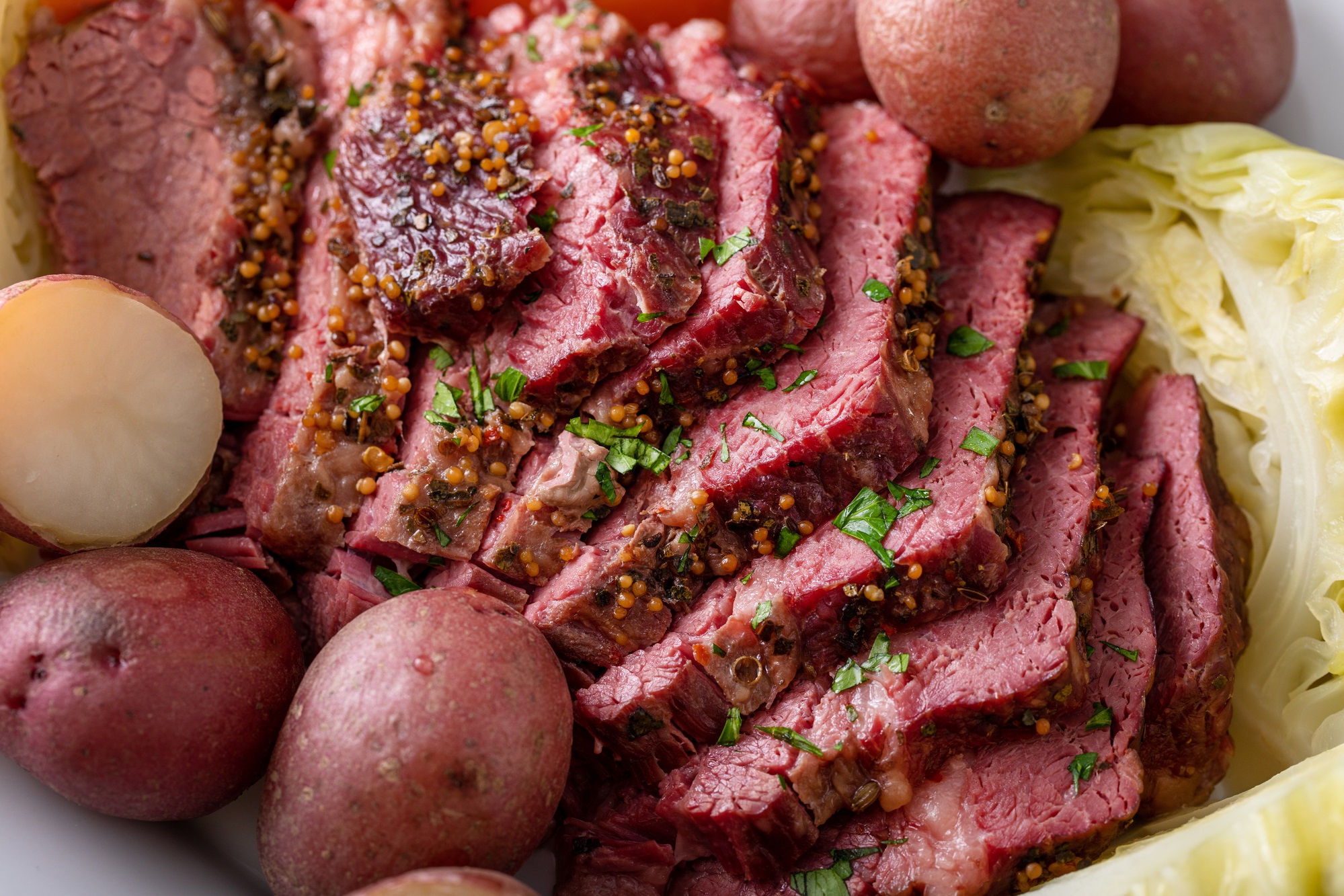
Find the direction of the muscle fibers, called the grain. Slice across the grain into thin pieces. Cutting with the grain can make even tender meat seem tough.
Serve the brisket with the potatoes, carrots, cabbage, and some of the cooking liquid.
Best Slow Cooker Time and Temperature
The best general setting is LOW for 8 to 10 hours for a 3- to 4-pound brisket. The exact time depends on the slow cooker, brisket thickness, starting temperature, and preferred texture.
Use these signs to guide the cook:
- Still tough: Continue cooking. Toughness usually means the connective tissue has not softened yet.
- Tender but dry: The brisket may be lean, overcooked, or sliced incorrectly.
- Falling apart: It is fully tender but may be difficult to slice neatly.
- Pink in the center: This can be normal for cured corned beef. Color alone does not show whether it is safe.
- Fork slides in easily: The brisket is ready to rest and slice.
Do not rely only on the clock. A fork test in the thickest section is the most useful practical check for tenderness.
How to Keep Corned Beef Tender
Choose the right cut
A point cut has more fat and may stay moist during a long cook. A flat cut has a more consistent shape and is easier to portion.
Avoid adding too much liquid
Corned beef does not need to swim in broth. A shallow layer of liquid creates moisture in the covered cooker without washing away as much flavor.
Keep the lid closed
Slow cookers work by holding steady heat and moisture. Frequent lid lifting can lower the temperature and lengthen the cook.
Cook until tender, not merely until done
Safe cooking and tender cooking are related but not identical. Beef can reach a safe internal temperature while remaining chewy. Continue cooking until a fork meets little resistance.
Slice against the grain
This step can make as much difference as the cooking time. Shorter muscle fibers feel more tender when you cut across them.
When to Add Potatoes, Carrots, and Cabbage
Root vegetables can cook with the brisket from the start. Cabbage should usually go in later.
| Ingredient | When to add | Reason |
|---|---|---|
| Onion | Start | Builds flavor and holds its shape |
| Garlic | Start | Infuses the cooking liquid |
| Carrots | Start | Need time to soften |
| Potatoes | Start | Large pieces tolerate long cooking |
| Cabbage | Last 1 to 2½ hours | Prevents excessive softness |
Cut potatoes and carrots into similar-size pieces so they finish at roughly the same time. If you use very large potatoes, place them close to the bottom of the cooker where the heat is strongest.

Should You Rinse Corned Beef Before Cooking?
Rinsing is a matter of taste, not a required safety step.
Corned beef can contain a great deal of surface brine. A quick rinse can reduce some of that salt. It will not remove all of the salt inside the meat, because the brisket has been cured throughout.
Rinse the meat if you plan to use salty broth, a salty glaze, or salty side dishes. Skip the rinse if you want a fuller cured-beef flavor and are using water or low-sodium broth.
Never rinse raw meat as a way to make it safer. Rinsing can spread raw-meat droplets around the sink and nearby surfaces. Wash your hands, cutting board, utensils, and sink area after handling the packaged brisket.
Common Mistakes to Avoid
Using too much salt
The brisket is already seasoned. Extra salt in the broth can make the finished meal unpleasantly salty.
Adding cabbage at the beginning
Long cooking can turn cabbage into a soft, sulfurous mass. Add it later for better flavor and texture.
Cutting the brisket right away
Slicing immediately can release more juices. A short rest helps the meat stay moist.
Slicing with the grain
This creates long muscle fibers that are harder to chew. Rotate the brisket if needed so you can cut across the grain.
Cooking a frozen brisket in the slow cooker
Do not put a frozen brisket directly into a slow cooker. It may spend too long in the temperature range where bacteria multiply quickly. Thaw it safely in the refrigerator before cooking.
Leaving leftovers at room temperature
Refrigerate leftovers within two hours. Divide a large amount into shallow containers so it cools faster. Use refrigerated leftovers within three to four days, or freeze them for longer storage.
How to Store, Reheat, and Freeze Leftover Corned Beef
Store sliced corned beef in an airtight container with a little cooking liquid. The liquid helps reduce drying during refrigeration and reheating.
Reheat the meat gently in a covered skillet with a few spoonfuls of broth or water. You can also warm it in the microwave in short intervals. Heat only the amount you plan to eat.
For freezing, wrap individual portions tightly and place them in a freezer-safe container or bag. Label the package with the date. Thaw frozen corned beef in the refrigerator, then reheat it until hot.
Leftover corned beef works well in:
- Reuben sandwiches
- Corned beef hash
- Breakfast skillets
- Potato soup
- Diced beef and cabbage bowls
- Eggs with chopped corned beef

Food Safety Guidance
Use a clean cutting board for cooked meat, or wash the board thoroughly before using it for other foods. Keep raw brisket, its package, and its juices away from ready-to-eat ingredients.
The U.S. Department of Agriculture recommends using a food thermometer to check meat safety. For beef roasts, USDA lists 145°F and a three-minute rest as the minimum safe endpoint. Slow-cooked corned beef may go well beyond that temperature because it needs extended cooking to become tender.
The slow cooker should be filled according to the manufacturer’s instructions. In general, avoid filling it to the rim. A cooker that is too full may heat unevenly, while one that is too empty may cook differently than expected.
If the brisket has an unusual odor, a damaged package, or a questionable storage history, do not taste it to determine whether it is safe. When in doubt, discard it.
Quick Troubleshooting Guide
Why is my slow cooker corned beef tough?
It probably needs more time. Brisket contains connective tissue that softens slowly. Keep cooking on LOW and test the thickest section with a fork every 30 to 60 minutes.
Why is my corned beef dry?
A lean flat cut, excessive cooking, or thin slicing in the wrong direction can cause a dry impression. Slice across the grain and serve with cooking liquid. Next time, avoid cooking much longer than needed after the brisket becomes tender.
Why is the meat still pink?
Curing can keep corned beef pink after cooking. Pink color is not a reliable safety test. Use a thermometer for the minimum safe temperature and a fork test for tenderness.
Why are my vegetables mushy?
They may have been cut too small or cooked too long. Use large pieces, and add cabbage near the end.
Can I cook corned beef on HIGH?
Yes, but LOW is usually more forgiving. If you use HIGH, begin checking the brisket at the early end of the estimated time range.

Frequently Asked Questions
Do you put corned beef fat-side up or down in a slow cooker?
Place it fat-side up. The fat cap can help shield the top of the meat from drying, although it will not replace proper cooking time or moisture.
Do you need to cover corned beef with water in a slow cooker?
No. Add enough liquid to cover the bottom and come partway up the brisket. Full submersion is not required.
Can you overcook corned beef in a slow cooker?
Yes. Extended cooking can make the brisket dry or cause it to fall apart. Check it when the estimated cooking time is nearly complete and remove it once it is fork-tender.
Can you cook corned beef without the seasoning packet?
Yes. The packet adds spices but is not required. You can cook the brisket with black pepper, garlic, onion, bay leaf, mustard, or other seasonings. Avoid adding much salt.
What is the best way to slice slow cooker corned beef?
Rest the brisket for 15 to 20 minutes, identify the grain, and cut across it into thin slices. If the grain changes direction, rotate the brisket as you slice.
Key Takeaways
- Cook a 3- to 4-pound corned beef brisket on LOW for about 8 to 10 hours.
- Add 1 to 2 cups of broth or water; do not completely cover the meat.
- Cook potatoes and carrots from the start.
- Add cabbage during the final 1 to 2½ hours.
- Use a thermometer for food safety and a fork test for tenderness.
- Rest the brisket before slicing it across the grain.
- Refrigerate leftovers within two hours and use them within three to four days.
Conclusion
Slow cooker corned beef brisket needs little hands-on work. Use a modest amount of liquid, cook the brisket slowly, add cabbage late, and wait for true fork tenderness. After a short rest and a clean cross-grain slice, the meat is ready for a classic American dinner or several easy leftover meals.
The best next step is to check the brisket’s weight, thaw it safely if needed, and plan for LOW cooking time plus a 15- to 20-minute rest before serving.