
A slow cooker is simple to use: add prepared ingredients, cover the pot, select Low or High, and let the appliance cook without lifting the lid. In U.S. kitchens, the safest method is to thaw meat first, fill the cooker correctly, follow the recipe’s timing, and keep cooked food at 140°F or above during serving.
Slow cookers use steady, moist heat to cook food over several hours. They work well for soups, chili, beans, stews, pulled pork, pot roasts, and other dishes that benefit from long cooking.

What You Need Before You Start
You need the slow cooker, its removable insert, the lid, a heat-safe surface, and a recipe designed for slow cooking. Check the appliance cord, lid, handles, and insert before use. Do not use a cooker with a cracked insert, damaged cord, or loose electrical parts.
Gather these basic items:
- A slow cooker with a working lid
- Fully thawed meat, poultry, or seafood
- Washed and cut vegetables
- Measured liquid, seasonings, and other ingredients
- A food thermometer for checking doneness
- Clean utensils and storage containers
Read the owner’s manual before using a new model. Controls differ. Some slow cookers have only Off, Low, High, and Warm. Others include a timer, temperature probe, sear setting, or automatic switch to Warm.
Know the main slow cooker settings
| Setting | Best use | General guidance |
|---|---|---|
| Low | Long cooking and tenderizing tough cuts | Often used for 6 to 10 hours |
| High | Faster cooking | Often used for 3 to 5 hours |
| Warm | Holding fully cooked food | Not intended for cooking raw food |
| Off | End of cooking | Refrigerate leftovers promptly |
These time ranges are common examples, not universal rules. The recipe, food size, cooker model, and starting temperature all affect cooking time. A newer cooker may heat differently from an older one.
“Low” and “High” are settings, not guaranteed food temperatures. Use the recipe and a food thermometer to confirm that meat, poultry, and other foods are fully cooked.

How to Operate a Slow Cooker Step by Step
Follow the steps below for most slow-cooker recipes.
1. Thaw ingredients safely
Thaw meat, poultry, and seafood in the refrigerator, in cold water, or in the microwave if you will cook it right away. Do not place a large frozen roast or frozen chicken directly into a slow cooker.
A slow cooker may take too long to move frozen food through the temperature range where bacteria grow quickly. This can create a food safety risk.
You can cook some frozen vegetables in a slow cooker, but follow the recipe and the appliance instructions. Frozen meat requires special care and should not be used unless the manufacturer and recipe give clear, safe directions.
2. Prepare the ingredients
Trim large amounts of excess fat from meat. Cut vegetables into pieces of a similar size so they cook at a similar rate.
Put dense vegetables, such as carrots, potatoes, and onions, near the bottom. Place meat on top unless the recipe says otherwise. The bottom of the insert is usually the hottest area.
Brown meat or sauté onions first when the recipe calls for it. browning can improve flavor and color, but it is not required for every dish. If you brown food, drain excess fat before adding it to the slow cooker.
3. Add the ingredients in the right order
Place food into the removable insert, not directly into the heating base. The heating base contains electrical parts and should not hold food or liquid.
Most recipes work best when the cooker is filled between one-half and two-thirds full. A cooker that is too full may cook slowly and unevenly. A cooker that is nearly empty may heat too fast and dry out the food.
Do not pack ingredients tightly. Leave enough space for heat to circulate and for liquids to simmer without spilling over.
4. Add the correct amount of liquid
Slow cookers lose less moisture than ovens and stovetop pots. Meat and vegetables also release water as they cook. For that reason, you often need less liquid than a standard stovetop recipe requires.
Use the amount listed in the slow-cooker recipe. Do not cover every ingredient with liquid unless the recipe instructs you to do so. Too much liquid can make a stew thin and dilute its flavor.
Avoid adding dairy products, pasta, rice, or seafood at the beginning unless the recipe specifically supports that method. These foods can curdle, become mushy, or overcook during a long cycle.
5. Secure the lid
Place the lid on the cooker before turning it on. A tight lid helps retain heat and moisture.
Avoid lifting the lid during cooking. Each lift releases heat and steam. The cooker may need extra time to recover, especially on Low. If you must stir or check the food, do so only when the recipe requires it.
Never operate the cooker without its lid unless the manual gives a specific instruction.
6. Select Low or High
Choose the setting that matches the recipe.
- Use Low for a longer cooking period and for tough cuts that need time to soften.
- Use High when you have less time or when the recipe is written for that setting.
- Use Warm only after the food has finished cooking.
Do not use the Warm setting to cook raw meat, poultry, seafood, or other uncooked ingredients. Warm is meant to hold hot, cooked food. It may not bring raw food to a safe temperature quickly enough.
7. Cook for the stated time
Keep the cooker on a stable, heat-resistant surface away from the edge of the counter. Keep the cord away from sinks, hot surfaces, and areas where someone could pull it.
Cooking time depends on several factors:
- The cooker’s size and design
- The amount of food
- The size of the meat and vegetable pieces
- Whether ingredients began cold or at room temperature
- The selected setting
- The recipe’s liquid and ingredient mix
Do not assume that doubling a recipe will double the cooking time. A larger amount may need a longer period, but the correct time depends on the cooker and food depth.
8. Check for doneness
Use a food thermometer in the thickest part of the food. Avoid touching bone, the cooker insert, or a pocket of liquid because these can give a false reading.
The U.S. Department of Agriculture lists these minimum internal temperatures:
- Poultry: 165°F
- Ground meats: 160°F
- Whole cuts of beef, pork, veal, and lamb: 145°F, followed by a three-minute rest
- Leftovers and casseroles: 165°F
These temperatures apply to the food, not the slow cooker’s dial. A thermometer is the best way to check whether the food is done.
9. Serve or switch to safe holding
Serve the food as soon as it reaches a safe finished temperature. If you need to hold it, use the Warm setting only when the food is already fully cooked.
Keep hot food at 140°F or above. If the cooker cannot keep the food at that temperature, transfer the food to shallow containers and refrigerate it promptly.
Refrigerate leftovers within two hours. If the room temperature is above 90°F, refrigerate them within one hour. Divide large amounts into shallow containers so they cool more quickly.

How to Adjust Cooking Times and Recipe Amounts
Slow-cooker recipes use broad time ranges because appliances vary. A useful starting point is that one hour on High may equal about two hours on Low, but this is only a rough cooking guide.
Do not use that conversion to decide whether food is safe. Check the food itself with a thermometer and follow the recipe’s instructions.
Common time adjustments
| Recipe instruction | Possible adjustment |
|---|---|
| 6 to 8 hours on Low | About 3 to 4 hours on High |
| 8 to 10 hours on Low | About 4 to 6 hours on High |
| Small pieces of food | May cook sooner |
| Large roast or whole poultry piece | May need more time |
| Half-filled cooker | May cook faster |
| Overfilled cooker | May cook slowly or unevenly |
These are practical estimates, not guarantees. Use them only when the recipe does not provide a different conversion.
When to add delicate ingredients
Add delicate ingredients near the end of cooking:
- Milk, cream, sour cream, and soft cheese
- Fresh herbs
- Seafood
- Cooked pasta
- Quick-cooking vegetables
- Thickening mixtures
Pasta often turns soft when cooked for many hours. Add it during the final part of cooking, or cook it separately and stir it in before serving.
Rice also varies by type. Some rice can absorb too much liquid and become sticky. Use a recipe written for the specific rice and slow cooker.
How to thicken a slow-cooker dish
If a stew or sauce is too thin, remove the lid only when the recipe allows it and use one of these methods:
- Stir in a cornstarch slurry near the end of cooking.
- Add a flour-based thickener according to the recipe.
- Mash some cooked potatoes, beans, or vegetables.
- Transfer some liquid to a saucepan and reduce it on the stove.
Do not leave the lid off for a long period while raw food is still cooking. Heat loss can extend the time needed to cook the dish safely.

Slow Cooker Safety Rules
Safe slow-cooker use depends on temperature control, clean handling, and quick storage. The appliance does not make unsafe food safe.
Keep raw and cooked foods separate
Wash your hands before and after handling raw meat. Use separate cutting boards or wash the board, knife, and counter with hot, soapy water before using them for ready-to-eat food.
Do not return cooked food to a plate that held raw meat unless you have washed the plate first.
Do not overfill the cooker
Overfilling can prevent even cooking and cause liquid to spill. It can also make it difficult for the center of the food to reach a safe temperature.
Underfilling can cause the food to cook faster than the recipe expects. Follow the owner’s manual when it gives a specific fill range.
Keep the cooker covered
The lid helps keep heat inside. Opening it often can lengthen cooking time and may affect the final texture.
If the lid breaks during cooking, follow the manufacturer’s instructions. Do not use an improvised cover unless the manufacturer says it is safe.
Handle the insert with care
Some inserts are made of ceramic or stoneware and can crack from sudden temperature changes. Do not place a hot insert on a cold, wet counter. Do not put a cold insert on a hot burner unless the manual says it is designed for stovetop use.
Never put the electrical heating base in water. Unplug it and wipe it with a damp cloth according to the manufacturer’s care instructions.
Store leftovers promptly
Transfer leftovers to shallow containers. Letting a large, deep pot of food cool slowly can keep the center warm for too long.
Label leftovers with the date. Use refrigerated leftovers within three to four days, or freeze them for longer storage. Reheat leftovers to 165°F before eating.

Common Slow Cooker Problems and Fixes
The food is still raw
Possible causes:
- The cooker was set to Warm instead of Low or High.
- The lid was removed often.
- The cooker was overfilled.
- The meat pieces were too large.
- The appliance is not heating correctly.
- The recipe needed more time.
What to do: Keep the lid on and continue cooking if the food has remained under safe handling conditions. Check the thickest part with a food thermometer. If food has stayed between 40°F and 140°F for too long, do not taste it or try to rescue it.
If the cooker does not heat, unplug it and contact the manufacturer. Do not repair electrical parts yourself.
The meat is tough
Tough meat often needs more time, not less. Collagen in cuts such as chuck roast, pork shoulder, and beef brisket softens during long cooking.
Keep the lid closed and continue cooking on the recipe’s recommended setting. If the meat is dry and tough, the cooker may have been underfilled, the cut may have been too lean, or it may have cooked too long.
The vegetables are hard
Dense vegetables may need more time than small meat pieces. Cut potatoes, carrots, and similar vegetables into smaller, even pieces and place them near the bottom in future recipes.
If the dish contains acidic ingredients, such as tomatoes, the vegetables may soften more slowly. Follow the recipe’s order of ingredients.
The dish is watery
Too much liquid, frozen ingredients, or frequent lid lifting can affect the final texture. Use less liquid next time if the recipe allows it.
To correct the dish, thicken it near the end or reduce part of the liquid in a saucepan. Do not add a large amount of flour directly to the cooker because it may form lumps.
The dairy separated
Milk, cream, and sour cream can curdle during long cooking. Stir them in near the end, use a slow-cooker recipe designed for dairy, or choose a product that tolerates heat better.
The dish may still be safe to eat if it reached the correct temperature and was handled safely. Separation is usually a texture problem, not proof that the food has spoiled.
The slow cooker smells hot or electrical
Turn the appliance off and unplug it if you notice smoke, sparks, a burning odor, a damaged cord, or unusual sounds. Do not continue using it until the manufacturer or a qualified repair service confirms that it is safe.

Can You Leave a Slow Cooker Unattended?
Many slow-cooker recipes are designed for several hours of cooking, but you should follow the appliance manual and use basic fire safety.
Place the cooker on a clear, heat-resistant surface. Keep it away from curtains, paper, towels, the sink, and the edge of the counter. Do not use an extension cord unless the manufacturer specifically permits it and the cord is rated for the appliance.
Before leaving home, check that:
- The insert is seated correctly.
- The lid is secure.
- The cord is not damaged.
- The cooker is not near flammable items.
- The food and liquid amount match the recipe.
- The timer or automatic shutoff is set correctly, if available.
A slow cooker is not a substitute for safe food handling. Leaving it on for a long period does not make it safe to eat food that was improperly thawed, overfilled, or held at an unsafe temperature.

Slow Cooker Operating Checklist
Use this short checklist before starting:
- Read the recipe and appliance instructions.
- Thaw meat, poultry, and seafood safely.
- Cut ingredients into even pieces.
- Place dense vegetables near the bottom.
- Add the listed amount of liquid.
- Fill the insert one-half to two-thirds full.
- Secure the lid.
- Choose Low or High, not Warm, for raw food.
- Avoid lifting the lid.
- Check the final temperature with a food thermometer.
- Hold cooked food at 140°F or above.
- Refrigerate leftovers within two hours.
Frequently Asked Questions
Do you put water in a slow cooker?
Usually, yes, when the recipe calls for broth, water, sauce, or another liquid. You do not need to cover all ingredients with liquid. Slow cookers retain moisture, so adding too much liquid can make the dish watery.
Should food go in a slow cooker hot or cold?
Start with chilled or room-temperature ingredients as directed by the recipe, but thaw frozen meat first. Do not place a cold ceramic insert on a hot surface unless the manufacturer says it is safe.
Can you cook raw meat in a slow cooker?
Yes. A slow cooker can cook raw meat when it is thawed, the cooker is filled correctly, and the recipe provides enough time. Confirm doneness with a food thermometer rather than relying only on the clock.
Can you leave a slow cooker on overnight?
Many recipes use an overnight Low setting, but the appliance must be in good condition and placed on a safe, heat-resistant surface. Follow the manufacturer’s instructions, and make sure the finished food will be held at 140°F or refrigerated promptly.
Can you put frozen chicken in a slow cooker?
The safest general practice is to thaw chicken before placing it in a slow cooker. Frozen chicken may remain too long in the bacterial growth range. Use thawed chicken and check that the thickest part reaches 165°F.
When should you use the Warm setting?
Use Warm only to hold food that has already finished cooking. It is not a cooking setting for raw meat, poultry, seafood, beans, or vegetables.
Key Takeaways
- Use Low or High to cook and Warm only to hold cooked food.
- Thaw meat before slow cooking.
- Fill the insert about one-half to two-thirds full.
- Keep the lid closed during cooking.
- Check food with a thermometer.
- Keep hot food at 140°F or above.
- Refrigerate leftovers within two hours.
- Stop using the appliance if it shows electrical damage or overheating.
Sources
This guide is based on food-safety guidance and appliance-use information from:
- USDA: Slow Cookers and Food Safety
- USDA: Safe Minimum Internal Temperature Chart
- USDA: Leftovers and Food Safety
- U.S. Food and Drug Administration: Food Code
- The owner’s manual for the specific slow cooker model in use
Conclusion
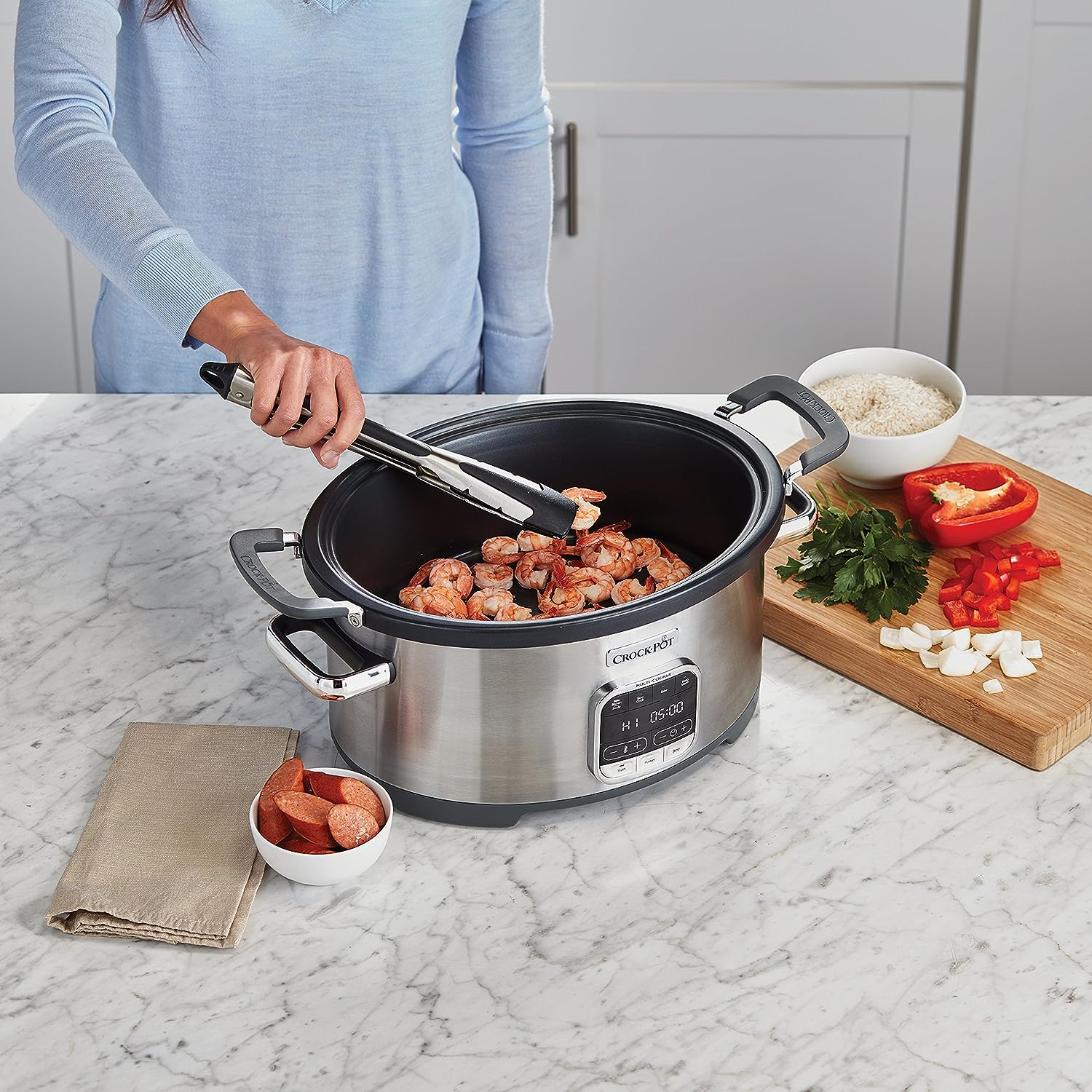
Operating a slow cooker safely is mostly a matter of good setup and patience. Thaw ingredients, use the right fill level, select Low or High, keep the lid closed, and check the finished food with a thermometer.
For your next meal, start with a tested slow-cooker recipe and follow its ingredient order and timing. When the food is done, serve it hot or cool it quickly in shallow containers for safe storage.