
Introduction
The easiest way to thicken beef stew in a slow cooker is to stir in a cornstarch slurry during the last 15 to 30 minutes of cooking. For a richer, more traditional gravy, use a flour slurry or mash some of the cooked potatoes into the broth.
This method works well in American home kitchens, whether you are using a 4-quart, 6-quart, or 8-quart slow cooker. Use standard US measuring cups and spoons, and keep the stew hot while you adjust its texture.
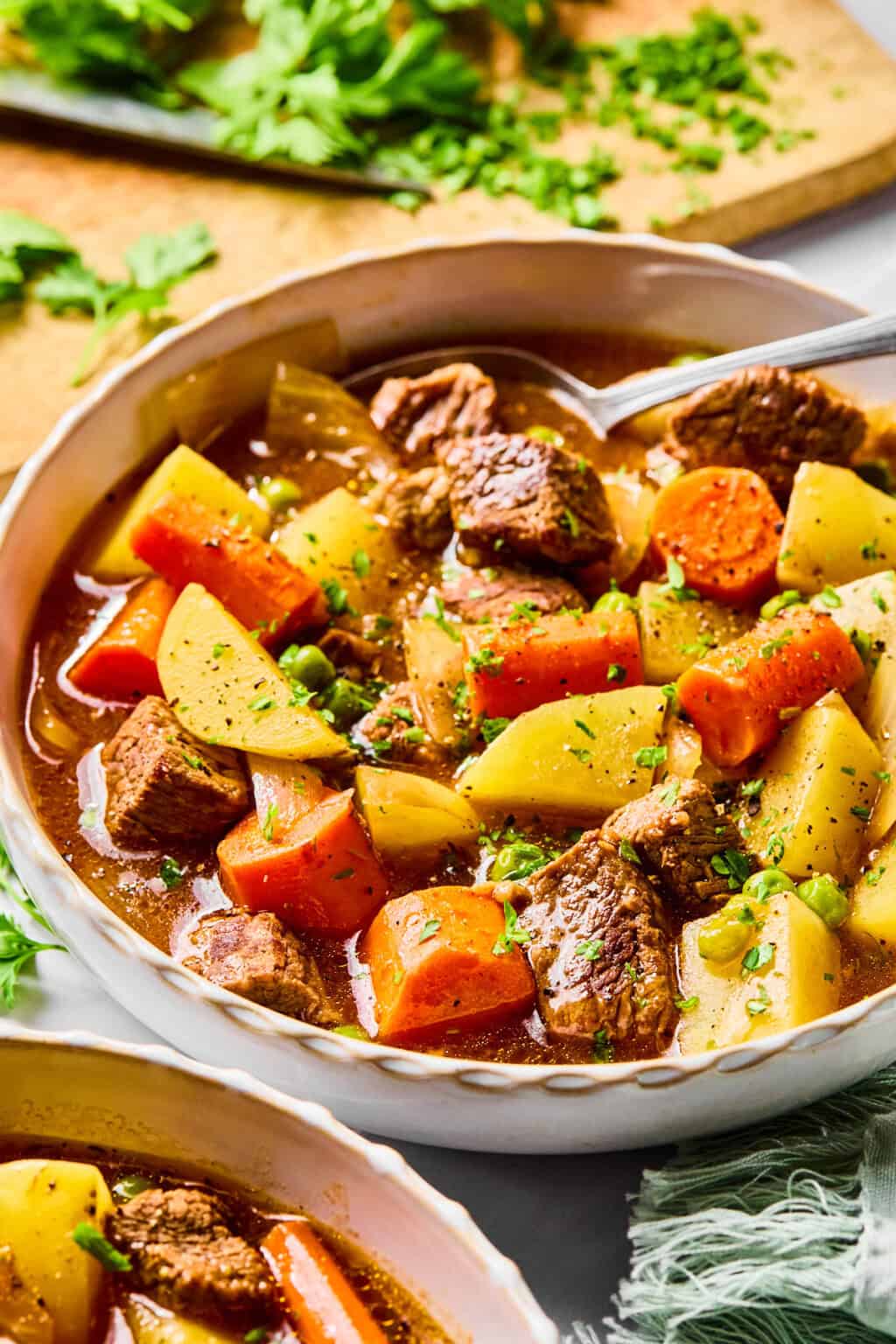
The Best Way to Thicken Beef Stew in a Slow Cooker
A cornstarch slurry is usually the most reliable choice because it thickens quickly and does not require extra cooking fat.
Basic cornstarch slurry
For about 4 to 6 servings, mix:
- 2 tablespoons cornstarch
- 2 tablespoons cold water
Stir until smooth. Add the mixture to the hot stew during the final 15 to 30 minutes of cooking. Stir well, replace the lid, and let the stew heat until the broth thickens.
If the stew still looks thin, make another small slurry with:
- 1 tablespoon cornstarch
- 1 tablespoon cold water
Add it gradually. It is easier to add more thickener than to fix stew that has become too pasty.
Cornstarch creates a glossy, smooth sauce. It is best for cooks who want a fast result near the end of the cooking time.
Basic flour slurry
For a more classic beef stew texture, mix:
- 2 tablespoons all-purpose flour
- ¼ cup cold water or cold beef broth
Whisk until smooth, then stir it into the stew. Let the stew cook for at least 20 to 30 minutes so the flour loses its raw taste.
Flour makes the broth more opaque and gravy-like than cornstarch. It may also feel slightly heavier on the tongue.

How to Thicken Beef Stew Step by Step
Follow these steps before adding more thickener. Your stew may already contain enough starch from potatoes, carrots, onions, or flour-coated beef.
1. Check the broth before thickening
Lift the lid and inspect the liquid. If the broth is only slightly loose, it may thicken as it cools for a few minutes. If it looks watery and does not cling to a spoon, add a thickener.
Do not judge the stew only by its appearance while it is piping hot. Slow-cooker liquid can seem thin until the starch fully activates.
2. Remove excess fat
A visible layer of fat can make the stew seem thin, even when the broth has enough body. Skim excess fat from the surface with a spoon.
Fat and water separate. A thickener will not fully solve a greasy broth.
3. Choose the thickener
Use this quick guide:
| Desired result | Best option | When to add it |
|---|---|---|
| Smooth, glossy sauce | Cornstarch slurry | Last 15–30 minutes |
| Traditional gravy | Flour slurry | Last 20–30 minutes |
| Rich, buttery sauce | Beurre manié | Last 15–30 minutes |
| Rustic, hearty texture | Mashed potatoes or vegetables | During the final 30 minutes |
| Light thickening | Instant tapioca | At the start of cooking |
| Reduced, concentrated flavor | evaporation | Final 20–40 minutes |
4. Mix the thickener with cold liquid
Always combine cornstarch or flour with cold water or broth first. This prevents lumps.
Never sprinkle dry cornstarch directly into hot stew. It can form small gel-like clumps that are difficult to break up.
5. Add the mixture slowly
Pour the slurry into the stew while stirring. Scrape around the bottom and sides of the slow-cooker insert so the mixture spreads evenly.
6. Cook until the stew reaches the right texture
For cornstarch, allow about 15 to 30 minutes on the High setting. For flour, allow at least 20 to 30 minutes.
The sauce should coat the back of a spoon. When you draw a line through the sauce with your finger, the line should remain visible for a moment.
7. Rest before serving
Turn off the slow cooker and let the stew rest for about 5 to 10 minutes. The sauce often becomes slightly thicker as it cools.

How Much Cornstarch or Flour Should You Use?
The correct amount depends on the amount of liquid, the thickness you want, and whether the stew already contains starch.
A useful starting point is:
- 1 tablespoon cornstarch per cup of liquid
- 2 tablespoons flour per cup of liquid
These are starting points, not strict rules. The liquid in slow-cooker stew is hard to measure because it mixes with meat juices, vegetables, and melted connective tissue.
For a medium batch, begin with less than you think you need. You can add a second slurry after the first one has cooked.
Example calculation
Suppose your stew has about 3 cups of thin broth. Start with:
- 2 tablespoons cornstarch
- 2 tablespoons cold water
If the stew remains too thin after cooking, add:
- 1 tablespoon cornstarch
- 1 tablespoon cold water
Do not add 3 or 4 tablespoons of dry starch at once. Too much can produce a gluey texture and dull the beef flavor.
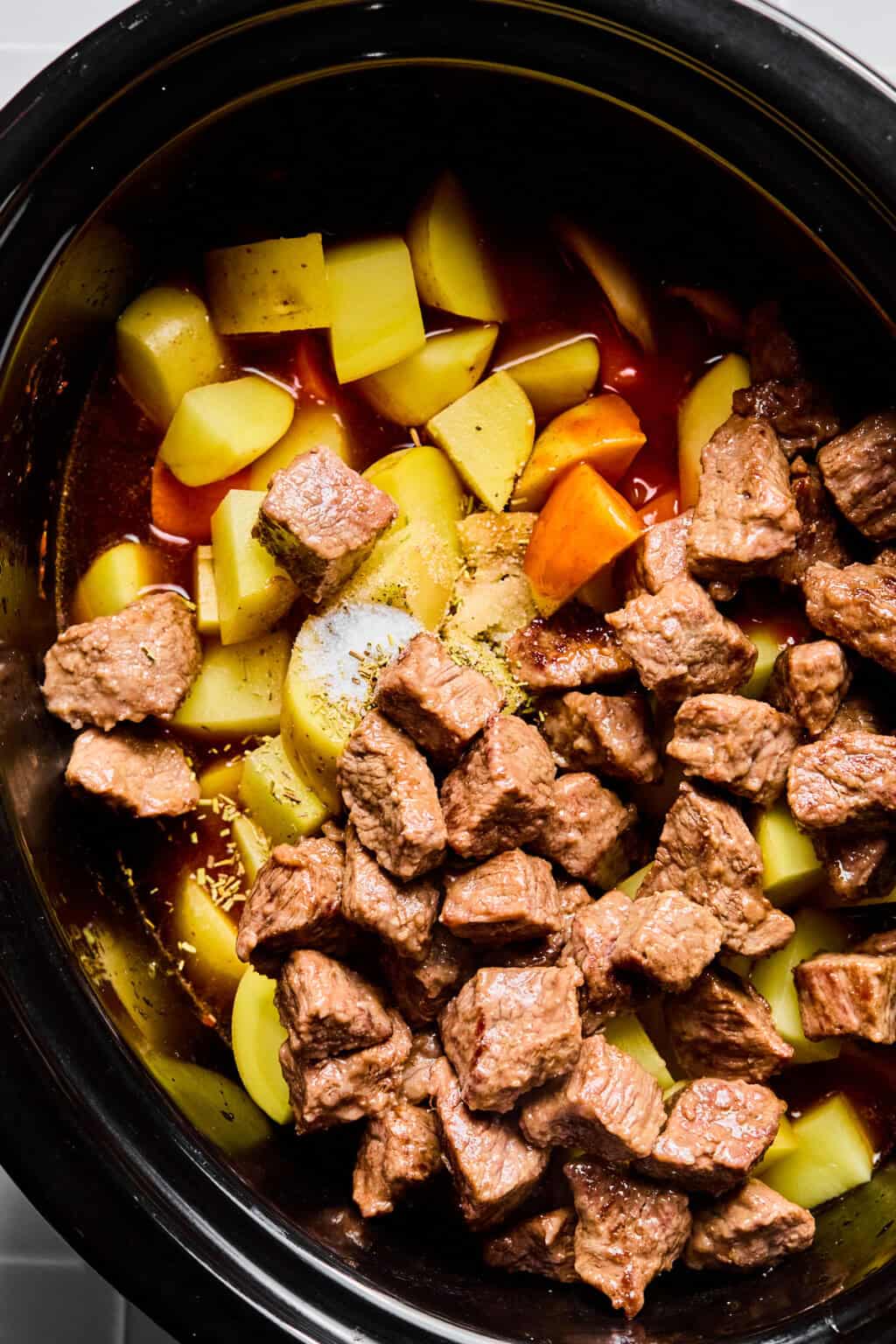
Other Ways to Thicken Slow-Cooker Beef Stew
Cornstarch and flour are not the only choices. The best method depends on your ingredients and the texture you want.
Mash some of the potatoes
Use the back of a spoon or a potato masher to crush a few cooked potato pieces against the side of the slow cooker. Stir the mashed potato into the broth.
This adds body without introducing a new ingredient. It also keeps the stew’s flavor profile intact.
Use this method when the stew contains enough potatoes. It works best for a rustic, home-style texture rather than a smooth gravy.
Use beurre manié
Beurre manié is a paste made from equal parts softened butter and flour.
For a medium slow-cooker batch, knead together:
- 1 tablespoon softened butter
- 1 tablespoon all-purpose flour
Drop small pieces into the hot stew and stir until they dissolve. Cook for 15 to 30 minutes.
The butter adds richness, but this method is not ideal if you want a low-fat stew.
Add instant tapioca
Instant tapioca can thicken slow-cooker stew while it cooks. Add a small amount at the beginning, following the package directions.
Tapioca can create a slightly glossy or gel-like texture. It is useful when you know in advance that the stew will contain a lot of liquid, but it is less convenient for correcting a finished stew.
Reduce the liquid
You can thicken stew by removing some moisture. Transfer the broth to a saucepan and simmer it on the stovetop until reduced. Then return it to the stew.
This method concentrates flavor instead of adding starch. It is often the best choice when the stew tastes weak as well as thin.
Never place a standard slow-cooker insert directly on a stovetop unless the manufacturer clearly states that it is designed for stovetop use.
Blend cooked vegetables
Blend a small amount of cooked onion, carrot, or potato with some broth. Stir the purée back into the stew.
This creates a thicker, more natural sauce. It may also make the broth less clear and slightly change its color.

Why Is Your Beef Stew Still Watery?
Thin stew usually comes from too much liquid, too little evaporation, or a thickener that was not cooked long enough.
Too much liquid was added
Slow cookers lose less water than a Dutch oven or uncovered pot. A recipe written for stovetop cooking may leave too much broth when prepared in a slow cooker.
Next time, reduce the liquid by about ¼ to ½ cup, depending on the recipe. Do not remove so much liquid that the meat and vegetables are no longer partly covered.
The lid was opened often
Each time you lift the lid, heat and steam escape. Frequent opening can extend cooking time and disturb the balance of the recipe.
Keep the lid closed during most of the cooking time. Open it only when you need to check the meat, add a thickener, or adjust seasoning.
The slurry was added too early
Cornstarch can lose thickening power after long cooking. Add cornstarch near the end instead of at the beginning.
Flour can tolerate a longer cooking period, but a flour slurry still needs time to cook and blend with the broth.
The slurry was not mixed well
Cold water and starch must be fully combined before they touch the hot liquid. If the mixture has settled, stir it again immediately before adding it.
The stew is hot but not thick yet
Some thickeners need time and heat. Give cornstarch about 15 to 30 minutes and flour at least 20 to 30 minutes.
If the slow cooker is on Low and the stew is barely hot, switch to High briefly while monitoring it. Avoid prolonged cooking on High if the beef and vegetables are already tender.

Common Mistakes to Avoid
Adding dry flour directly
Dry flour can form lumps and leave a raw taste. Mix it with cold water or use beurre manié.
Using warm water for cornstarch
Warm liquid can cause the outside of the starch to gel before it disperses. Cold water produces a smoother slurry.
Adding too much thickener
A thick stew should still flow from a spoon. Too much starch can make it pasty, gummy, or overly thick after cooling.
Thickening before the vegetables are tender
Do not focus on the sauce before the meat and vegetables are done. Once the stew thickens, heat moves through it less easily, and the texture can become harder to judge.
Covering up a bland stew with starch
Thickening changes texture, not flavor. Taste the broth before and after thickening. You may need salt, black pepper, Worcestershire sauce, herbs, or a small amount of beef stock.
Add salt carefully because commercial beef broth, bouillon, and Worcestershire sauce can contain substantial sodium.
Leaving the stew at an unsafe temperature
Use a food thermometer when you are unsure whether the stew is hot enough. The U.S. Department of Agriculture recommends cooking whole cuts of beef to at least 145°F with a three-minute rest, while ground beef should reach 160°F. Stew meat should also become tender before serving.
Refrigerate leftovers within two hours. Store them in shallow containers so they cool more quickly, and reheat leftovers to 165°F.

How to Fix Beef Stew That Became Too Thick
If the stew becomes too thick, stir in warm beef broth, water, or unsalted stock one or two tablespoons at a time.
Taste after each addition. Water loosens the texture but may weaken the flavor. Beef broth adds flavor, but it may also increase the salt level.
If the stew is thick because of too much flour or cornstarch, a small amount of acid can help balance the richness. Try a teaspoon of Worcestershire sauce or a small splash of red wine vinegar, depending on the recipe. Add these carefully; they will change the flavor as well as the texture.
Can You Thicken Beef Stew Without Flour?
Yes. Use cornstarch, mashed potatoes, puréed vegetables, instant tapioca, or reduced broth.
Cornstarch is naturally gluten-free, but check the package label if cross-contact with wheat matters. Also check prepared beef broth, bouillon, seasoning blends, and Worcestershire sauce, since some products may contain gluten-containing ingredients.
Arrowroot powder is another option. Mix it with cold water and add it near the end. Arrowroot creates a clear sauce, but long cooking and very high heat can weaken its thickening effect.
Can You Thicken Beef Stew After It Has Finished Cooking?
Yes. Turn the slow cooker to High if needed, then add a small cornstarch or flour slurry. Stir it in and cook until the sauce thickens.
For the fastest result, transfer some broth to a saucepan, whisk in the slurry, heat it until thick, and stir it back into the stew. Use a stovetop-safe saucepan rather than placing a regular slow-cooker insert over direct heat.
Frequently Asked Questions
How long does cornstarch take to thicken beef stew in a slow cooker?
Cornstarch usually takes about 15 to 30 minutes in a hot slow cooker. Stir after adding it, keep the lid on, and check the texture near the end of that period.
Can I add flour straight to slow-cooker beef stew?
It is better not to. Dry flour can clump and taste raw. Mix flour with cold water or broth first, or make a butter-flour paste.
Should I remove the lid to thicken beef stew?
Removing the lid can allow some moisture to evaporate, but it also lowers the temperature and may slow cooking. For a predictable result, use a slurry near the end. If you remove the lid, do so only after the meat is tender.
What is better for beef stew: flour or cornstarch?
Choose flour for a traditional, opaque gravy. Choose cornstarch for quick thickening and a smoother, glossier sauce. Start with a small amount of either one because the sauce will continue to thicken as it cools.
Can I thicken beef stew with potatoes?
Yes. Mash part of the cooked potato into the broth, or blend a small amount of potato with broth and return it to the slow cooker. This produces a rustic texture and adds no new starch product.
Conclusion
For most slow-cooker beef stews, start with 2 tablespoons of cornstarch mixed with 2 tablespoons of cold water. Add it during the final 15 to 30 minutes, stir well, and allow the stew to rest before serving.
Use flour for a classic gravy, mashed potatoes for a rustic texture, or reduced broth when you want more concentrated flavor. Add thickener in small amounts, give it enough time to work, and adjust the final seasoning only after the sauce reaches the texture you want.