
To use a knife sharpener rod, match the angle, draw the blade gently, and repeat on both sides.
A knife sharpener rod can help restore a smooth, straight edge in less than a minute. The key is using light pressure, a steady angle, and safe hand placement. After years of cooking and testing kitchen tools, I have found that most poor results come from pressing too hard or rushing the first few strokes. This guide explains how to use a knife sharpener rod correctly, how to choose the right rod, and when a sharpening stone or professional service is a better choice.
What Is a Knife Sharpener Rod?
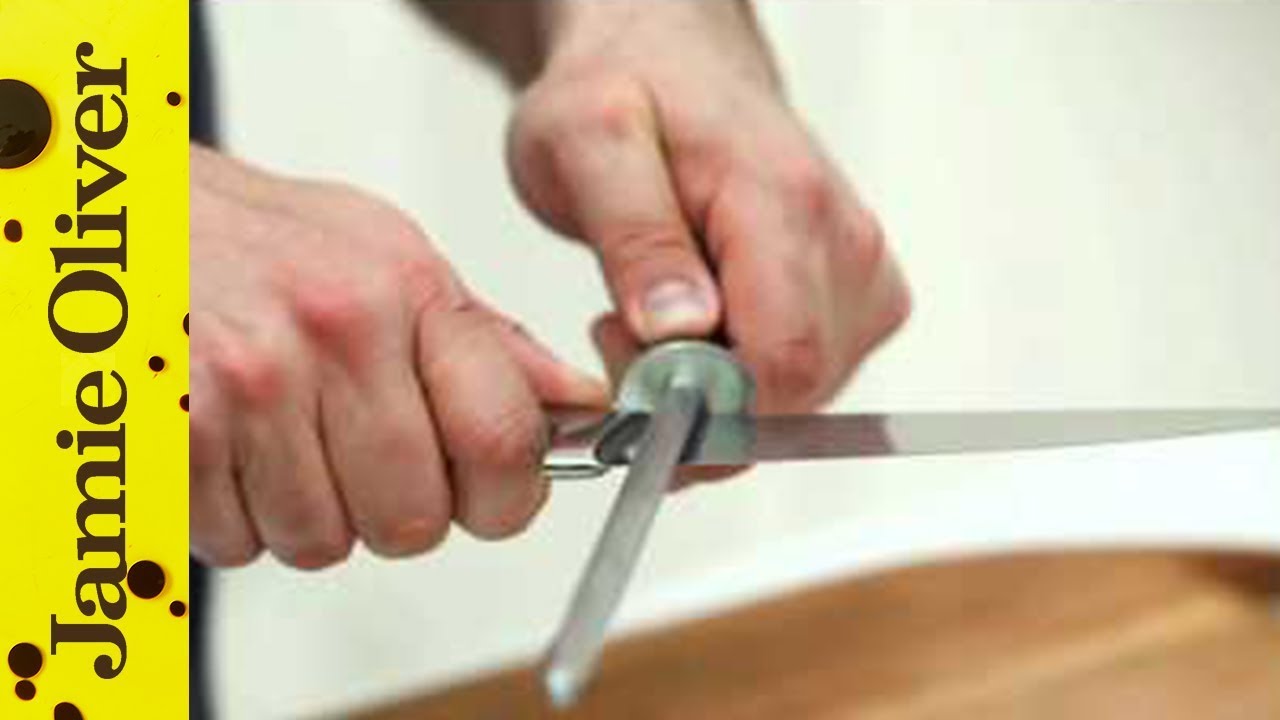
A knife sharpener rod is a long, narrow tool used to maintain or sharpen a knife’s cutting edge. Many people call it a honing steel, but not every rod works in the same way.
A traditional steel rod mainly realigns the edge. It does not remove much metal. A ceramic or diamond-coated rod can remove a small amount of metal and may sharpen a dull knife more effectively.
Common types include:
• Steel honing rod: Straightens a slightly bent knife edge.
• Ceramic rod: Realigns the edge and removes a small amount of metal.
• Diamond-coated rod: Removes more metal and can sharpen a duller blade.
• Grooved steel rod: Uses ridges to realign the edge, but it can be harsh on thin or delicate knives.
The word “sharpener” often appears on product packaging, even when the tool mainly hones. Knowing this difference helps you choose the right tool and set realistic expectations.
A knife that slides through a tomato with little pressure usually needs simple honing. A knife that crushes the tomato skin or feels blunt may need true sharpening with a stone, guided sharpener, or professional service.

Honing Versus Sharpening
Honing and sharpening are related, but they are not the same process.
Honing pushes a slightly misaligned edge back into place. Think of the knife edge as a row of tiny teeth. Daily use can bend those teeth to one side. A honing rod gently brings them back into line.
Sharpening removes metal to create a new edge. It is needed when the blade has lost its shape or has become very dull. A whetstone, diamond plate, electric sharpener, or diamond rod can perform this task.
Use a honing rod when:
• The knife still cuts but feels less smooth.
• The blade slips on food before cutting.
• The edge looks straight but does not feel as keen.
• You use the knife often and want to maintain it.
Use a true sharpener when:
• The blade will not cut paper cleanly.
• The knife crushes soft foods.
• You see chips or flat spots on the edge.
• Honing does not improve the cut.
One mistake I made early on was using a steel rod on a very dull knife for several minutes. It felt productive, but the blade did not improve because the edge needed metal removal. A rod is a maintenance tool first, not a cure for every dull blade.
How to Use a Knife Sharpener Rod Safely
Safety should come before speed. A knife sharpener rod is easy to use, but the exposed blade can cause a serious cut if your hand slips.
Before you begin, clear the counter and remove wet towels, loose utensils, and other objects. Use a well-lit area where you can see the blade and the rod clearly.
Follow these safety steps:
• Hold the rod firmly by its handle.
• Keep the rod tip pointed away from your body.
• Keep your fingers behind the guard or handle.
• Hold the knife by its handle, not near the cutting edge.
• Use slow, controlled strokes.
• Keep children and pets away from the work area.
• Wipe the blade before using it to prepare food.
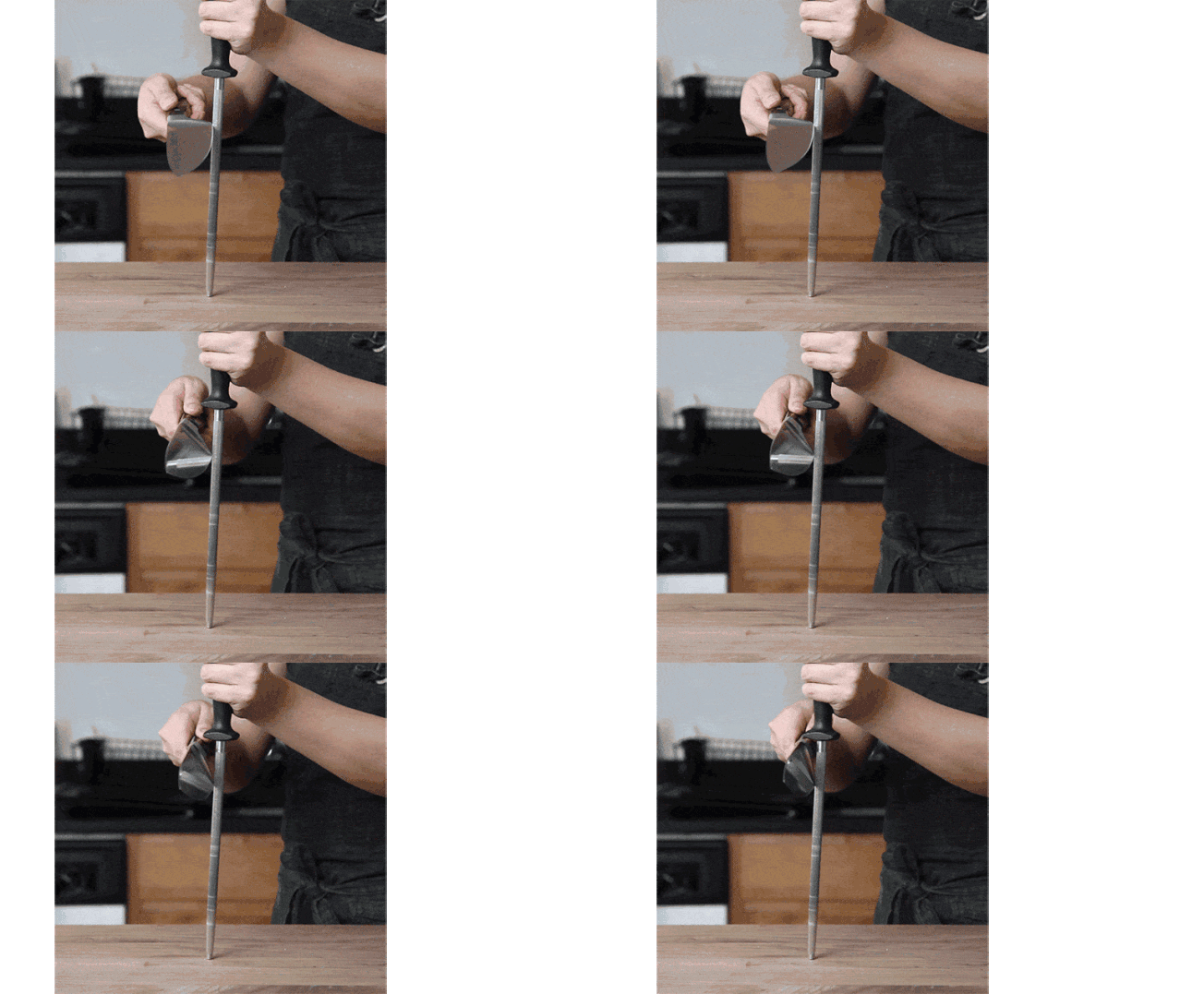
Many professionals prefer to keep the rod tip on a cutting board. This method gives the tool a stable base and reduces the chance of a slip. It also makes it easier for beginners to maintain a consistent angle.
Avoid holding the rod in the air while moving the knife quickly. That method can work with practice, but it offers less control. A stable board gives you a safer starting point.
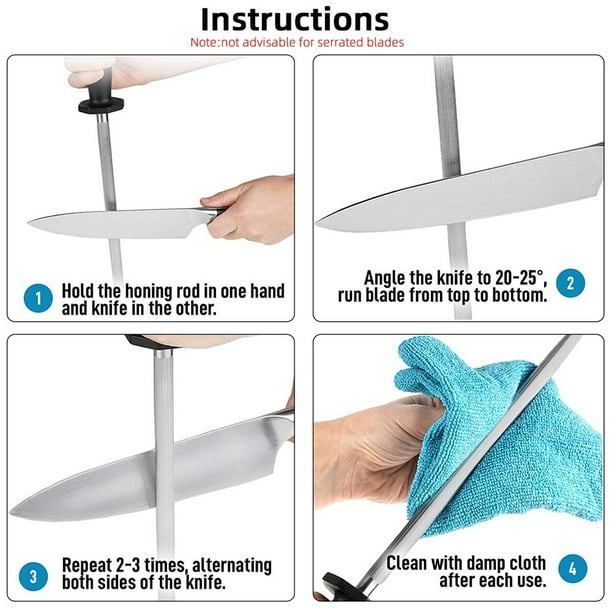
How to Use a Knife Sharpener Rod Step by Step
The following method works well for most kitchen knives and standard honing rods.
1. Clean and inspect the knife
Wash and dry the knife before honing it. Look along the edge under a bright light. A straight, clean edge usually needs only a few passes.
Check for chips, deep scratches, rust, or a visibly bent section. A damaged blade may need a sharpening stone or professional repair instead of a honing rod.
2. Find the correct angle
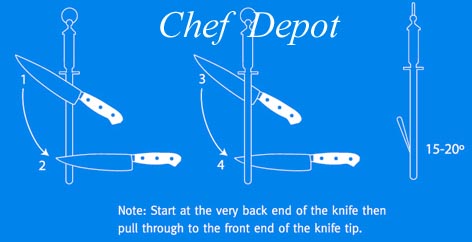
Most Western kitchen knives work well at about 15 to 20 degrees per side. A 20-degree angle is common for durable chef’s knives, while a 15-degree angle may suit thinner Japanese-style knives.
If you are unsure, check the knife maker’s instructions. The correct angle depends on the blade design, steel, and intended use.
You can estimate the angle by imagining a 45-degree angle and cutting it in half. Another simple trick is to place the knife flat against the rod, then lift the spine slightly until the gap is about the width of a coin.
3. Place the rod securely
Set the rod tip on a cutting board with the handle pointing upward. Hold the handle firmly with your non-cutting hand.
Keep the rod vertical. A leaning rod changes the angle during each stroke, which can create an uneven edge.
4. Start at the heel
Place the heel of the knife against the upper part of the rod. The heel is the part of the blade closest to the handle.
Keep the cutting edge facing away from you. Hold the blade at your chosen angle, then gently draw it down and toward you so the stroke finishes near the tip of the rod.
5. Follow the curve of the blade
As you move the knife down the rod, guide it from heel to tip. The rod should contact the full cutting edge, not just the middle.
When the stroke reaches the tip, lower the handle slightly. This follows the curve of the blade and helps prevent the tip from becoming rounded.
6. Repeat on the other side
Move to the opposite side of the knife and repeat the same motion. Use the same angle and the same number of passes.
For a lightly dull knife, try three to five gentle strokes per side. You may use a few more passes with a ceramic or diamond rod, but more strokes do not always mean a sharper edge.
7. Test the knife
Wipe the blade with a clean cloth. Test it on a sheet of paper or a soft food such as a tomato.
Do not test sharpness with your finger. A sharp blade can cut skin before you feel the pressure.
A knife sharpener rod should make the cut feel smoother. If the knife still struggles, stop repeating the same motion. The blade may need actual sharpening.
8. Clean and store the tools
Wipe the rod according to the manufacturer’s instructions. Steel rods can collect tiny metal particles, while ceramic and diamond rods may need a damp cloth.
Store the knife in a block, sheath, or magnetic strip. Avoid tossing it into a drawer, where the edge can strike other tools.

The Best Angle for a Knife Sharpener Rod
The angle is one of the most important parts of using a knife sharpener rod. A low angle can produce a fine edge, but it may be less durable. A wider angle can create a stronger edge, but it may not feel as keen.
Use these ranges as a basic guide:
• 15 degrees per side: Thin, precise edges on many Japanese-style knives.
• 17 to 18 degrees per side: A balanced angle for many fine kitchen knives.
• 20 degrees per side: A durable angle for common Western chef’s knives.
• 22 to 25 degrees per side: Tougher edges for utility knives or heavy work.
These numbers are guidelines, not strict laws. The original bevel on the knife matters. If you change the angle too much, you may remove unnecessary metal and make the edge uneven.
When teaching beginners, I suggest starting near 20 degrees per side. It is easy to control and works well for many everyday kitchen knives. Once your hand becomes steady, you can adjust the angle for a thinner or tougher edge.
How Much Pressure Should You Use?
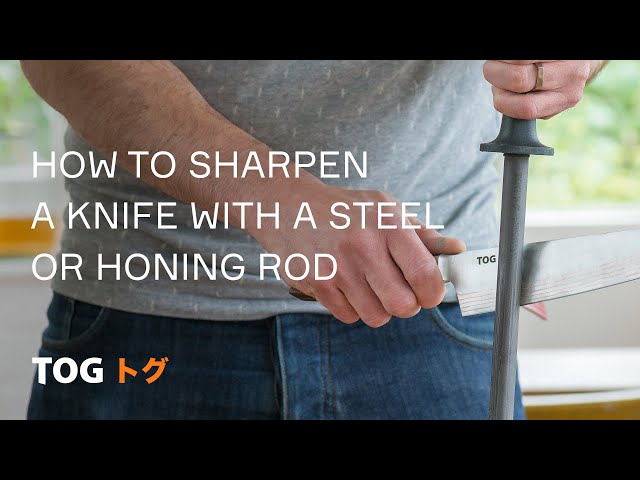
Use less pressure than you think. The knife should glide over the rod rather than scrape against it.
Imagine brushing dust from a table. That light touch is closer to the pressure you need. Pressing hard can damage the edge, create a rough burr, and wear the blade faster.
A useful rule is:
• Start with light pressure.
• Make three slow passes.
• Test the knife.
• Add only a few more passes if needed.
Heavy pressure is especially risky with ceramic and diamond rods. These surfaces can remove metal quickly. If you press too hard, you may create an uneven bevel or shorten the useful life of the knife.
The sound can also help. A smooth, quiet stroke usually suggests good control. A harsh scraping sound may mean too much pressure, an incorrect angle, or a damaged rod surface.
Common Mistakes to Avoid
Learning how to use a knife sharpener rod becomes easier when you know what not to do.
Using the wrong tool for a very dull knife
A honing rod cannot repair every dull blade. If the edge is rounded, chipped, or badly worn, use a whetstone, guided sharpener, or qualified knife service.
Moving too fast
Fast strokes may look professional, but they reduce control. Slow movements help you hold the angle and follow the blade’s curve.
Pressing too hard
Hard pressure can bend or damage the edge. It can also remove more steel than necessary, especially with a diamond rod.
Changing angles during a stroke
An inconsistent angle creates an uneven bevel. Keep your wrist firm and move your arm as one unit.
Sharpening only one side
Most kitchen knives have two bevels. Work both sides evenly unless you are maintaining a single-bevel knife.
Ignoring the knife’s tip
The tip needs a slight downward movement as it travels over the rod. If you pull the knife straight down without following the curve, you may round the tip.
Using a damaged rod
Check for deep grooves, cracks, loose coating, or rough patches. A damaged rod can scratch the blade or create an uneven edge.
Assuming every knife uses the same angle
A heavy cleaver, thin fillet knife, and Japanese chef’s knife may need different treatment. When available, follow the manufacturer’s guidance.

How Often Should You Use a Knife Sharpener Rod?
The right schedule depends on how often you cook, the knife’s steel, and the cutting board you use.
A home cook may use a steel rod once every one to two weeks. Someone who cooks daily may hone a knife every few uses. Do not use a rod automatically after every cut. Let the knife’s performance guide you.
Use a simple cutting test. If the knife cuts cleanly and feels controlled, leave it alone. If it begins to slide or crush food, use a few careful passes with the rod.
Avoid honing as a substitute for sharpening. Even the best knife sharpener rod cannot restore metal that has already worn away. Many knives need true sharpening every few months or once or twice a year, depending on use.
Cutting boards also affect edge life. Wood and quality plastic boards are usually kinder to knife edges than glass, stone, ceramic, or hard countertops. The United States Department of Agriculture also recommends using a stable cutting surface and handling knives carefully to reduce injury risks.
How to Choose the Right Knife Sharpener Rod
Choose a rod based on your knife, skill level, and maintenance needs.
Steel rods
Steel rods are durable and useful for regular edge alignment. They are a good choice for many Western chef’s knives.
Choose one with:
• A smooth surface or fine texture.
• A comfortable, secure handle.
• A finger guard.
• A length that matches your largest knife.
Ceramic rods
Ceramic rods are often smoother than grooved steel rods. They can realign an edge and remove a small amount of steel.
They are a good option for people who want a gentle tool with some sharpening ability. Ceramic is hard but brittle, so do not drop the rod.
Diamond rods
Diamond-coated rods can remove metal faster. They are useful for duller knives and harder blade steels.
Use a light touch. A diamond rod is not automatically better for every knife. Its aggressive surface can remove too much material when used with heavy pressure or too many strokes.
Rod length
A rod should be longer than the knife blade you plan to maintain. A 10-inch rod suits many home kitchen knives, while a shorter rod may work for small paring knives.
A longer rod gives you more room for a smooth stroke. It also makes it easier to maintain contact with the blade from heel to tip.
Knife Sharpener Rod Maintenance
A clean rod gives more consistent results. Metal dust, food oils, and debris can build up on the surface over time.
Follow the care instructions supplied with the rod. In general:
• Wipe a steel rod with a dry or slightly damp cloth.
• Clean a ceramic rod with mild soap and water if the maker allows it.
• Wipe a diamond rod gently and avoid harsh scrubbing.
• Dry the rod fully before storing it.
• Keep the tool away from moisture and loose objects.
Never use oil unless the manufacturer specifically recommends it. Oil can trap dust and make the rod harder to clean.
Inspect the handle and guard from time to time. A loose handle can make the tool unsafe. Replace a rod that is cracked, badly worn, or missing its protective surface.
How to Tell Whether It Worked
A properly maintained knife should feel more controlled, not simply more aggressive. It should enter food without sliding and move through the cut with less force.
Try these safe tests:
• Slice a sheet of paper from the edge.
• Cut a tomato without pressing down hard.
• Slice an onion with a smooth forward motion.
• Shave a thin piece from a soft fruit or vegetable.
Paper testing is useful, but food gives a better real-world result. A blade may cut paper while still struggling with a tomato skin.
Look for smooth cutting rather than a loud scraping feel. If the knife produces a rough, jagged cut after honing, the edge may have a burr or may need sharpening with an abrasive tool.
When to Use a Whetstone or Professional Service
A knife sharpener rod is convenient, but it has limits. Use a whetstone when you need to rebuild the bevel or remove more metal with careful control.
A guided sharpening system may be easier for beginners who want a set angle. An electric sharpener can be convenient, but some models remove more metal than necessary. Select one designed for your knife type.
Professional service may be best when:
• The blade has large chips.
• The knife is expensive or delicate.
• The edge is bent badly.
• You are not comfortable controlling the angle.
• The knife has a special single-bevel design.
A professional should explain how much metal will be removed and what edge angle will be used. This transparency matters because repeated aggressive sharpening can shorten a knife’s working life.
Frequently Asked Questions About How to Use a Knife Sharpener Rod
Should I push the knife into the rod?
No. Use light pressure and let the blade glide over the surface. Heavy pressure can damage the edge, especially with ceramic or diamond-coated rods.
How many times should I run a knife over the rod?
Start with three to five gentle passes on each side. Test the knife, then stop if the edge feels smooth and cuts well.
Should the knife sharpener rod be vertical or horizontal?
A vertical rod secured on a cutting board is usually safest for beginners. It helps you control the tool and maintain a steady angle.
Can a knife sharpener rod sharpen a completely dull knife?
A ceramic or diamond rod may improve a moderately dull knife, but a traditional steel rod mainly realigns the edge. A very dull, chipped, or rounded blade usually needs a whetstone, guided sharpener, or professional service.
What angle should I use with a knife sharpener rod?
Many kitchen knives work well at 15 to 20 degrees per side. Check the maker’s instructions when possible, since the ideal angle depends on the knife’s design and steel.
Can I use a knife sharpener rod on a serrated knife?
A standard rod is not ideal for most serrated knives. Use a tapered ceramic tool that fits the individual gullets, and sharpen only the beveled side.
How often should I use a knife sharpener rod?
Use it when the knife begins to feel less smooth, often every few uses or once every week or two for home cooking. Stop honing when it no longer improves the cut, because the knife may need real sharpening.
Conclusion
Using a knife sharpener rod is simple when you focus on safety, angle, and light pressure. Hold the rod steady, start at the heel, follow the blade to the tip, and repeat the same number of strokes on both sides. Remember that a steel rod mainly realigns an edge, while ceramic and diamond rods can remove a small amount of metal.
Practice on an everyday chef’s knife and test the edge with food, not your finger. With a calm hand and regular care, you can keep your kitchen knives smoother, safer, and more enjoyable to use. Try these steps during your next meal prep session, and share your results or favorite knife care tips in the comments.