
Potatoes and carrots usually take 6 to 8 hours on LOW or 3 to 4 hours on HIGH in a slow cooker. Cut both vegetables into similar 1- to 2-inch pieces, add enough liquid for the recipe, and cook until a fork slides into the center with little resistance.
The exact time depends on the size of the pieces, the type of potato, the amount of food in the cooker, and how hot your slow cooker runs. Start checking near the early end of the range, but expect root vegetables to need more time than softer vegetables.
Quick Answer: Slow Cooker Times for Potatoes and Carrots
| Slow cooker setting | Approximate cooking time | Best use |
|---|---|---|
| LOW | 6–8 hours | Meals with meat, broth, or a long cooking time |
| HIGH | 3–4 hours | Faster meals and smaller batches |
| LOW for firm pieces | 5–6 hours | When you want vegetables to hold their shape |
| LOW for very soft vegetables | 8–9 hours | Soups, stews, and mash-style dishes |
These times apply to peeled or unpeeled potatoes and carrots cut into similar pieces. Whole potatoes, large chunks, a full cooker, or very cold ingredients may take longer.

How to Cook Potatoes and Carrots in a Slow Cooker
For even cooking, follow a simple preparation and layering method.
What you need
- Potatoes
- Carrots
- Cooking liquid, such as broth, water, sauce, or canned tomatoes
- Salt and seasonings
- A slow cooker with a working lid
- A fork or thin knife for testing doneness
Step-by-step method
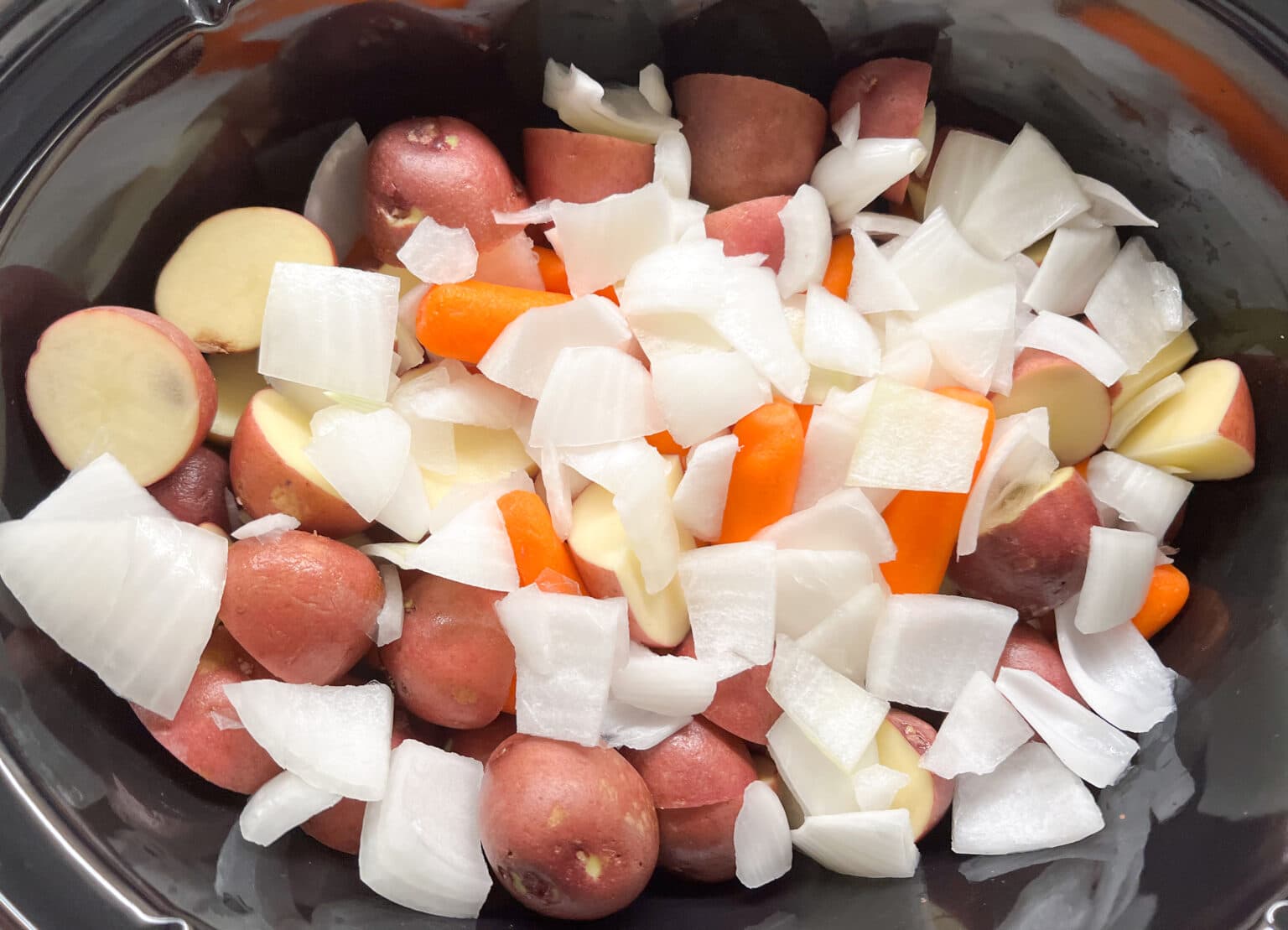
- Wash the vegetables. Peel the carrots if you prefer a smoother texture. Scrub potatoes well if you plan to leave the skins on.
- Cut the vegetables evenly. Aim for pieces about 1 to 2 inches thick. Small pieces cook faster.
- Place dense vegetables near the bottom. Put potatoes and carrots below meat or other large ingredients when possible. The bottom of the crock tends to heat more strongly.
- Add the cooking liquid. Use the amount called for in your recipe. The vegetables do not need to be fully submerged.
- Cover the slow cooker. Keep the lid closed during cooking. Each time you lift it, heat escapes and cooking slows.
- Cook on LOW for 6 to 8 hours or HIGH for 3 to 4 hours.
- Test the largest piece. A fork should enter the center easily. If it meets a hard core, continue cooking for 30 to 60 minutes and test again.
Do not rely only on the clock. Fork tenderness is the best practical sign that potatoes and carrots are done.
Why Potatoes and Carrots Take So Long in a Slow Cooker
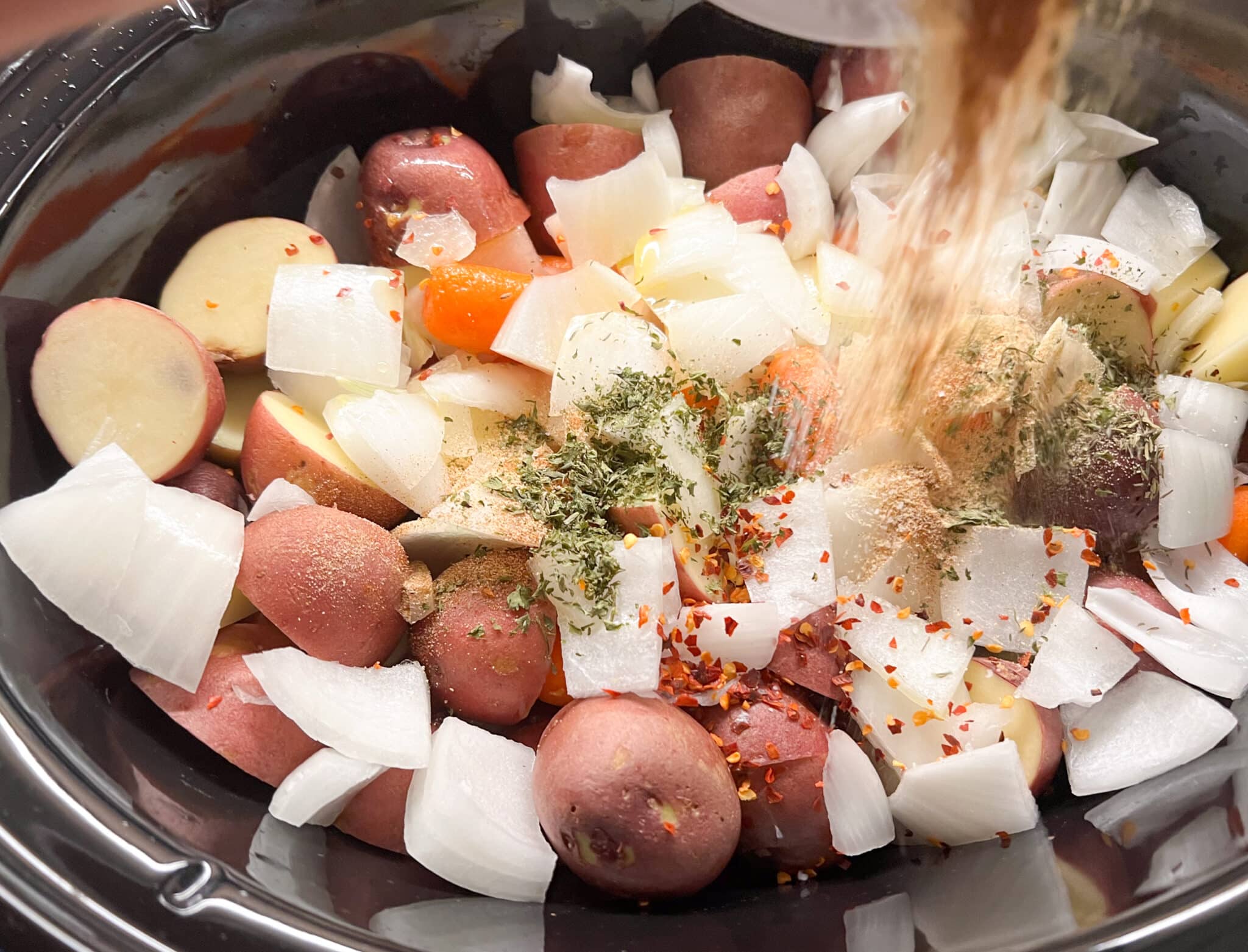
Potatoes and carrots are firm root vegetables with dense cell walls. They need steady heat and moisture to soften. A slow cooker warms food more gently than an oven or stovetop, so the vegetables may need several hours before their centers become tender.
Size has the largest effect on cooking time. A 1-inch cube may become tender much sooner than a whole potato. A large carrot cut lengthwise can also remain firm in the middle while small carrot slices are already soft.
The amount of food matters too. A nearly full crock can take longer to heat than a half-full crock. A cold roast, frozen ingredients, or a large amount of liquid can also delay the point at which the vegetables become tender.
Cooking Time by Potato and Carrot Size
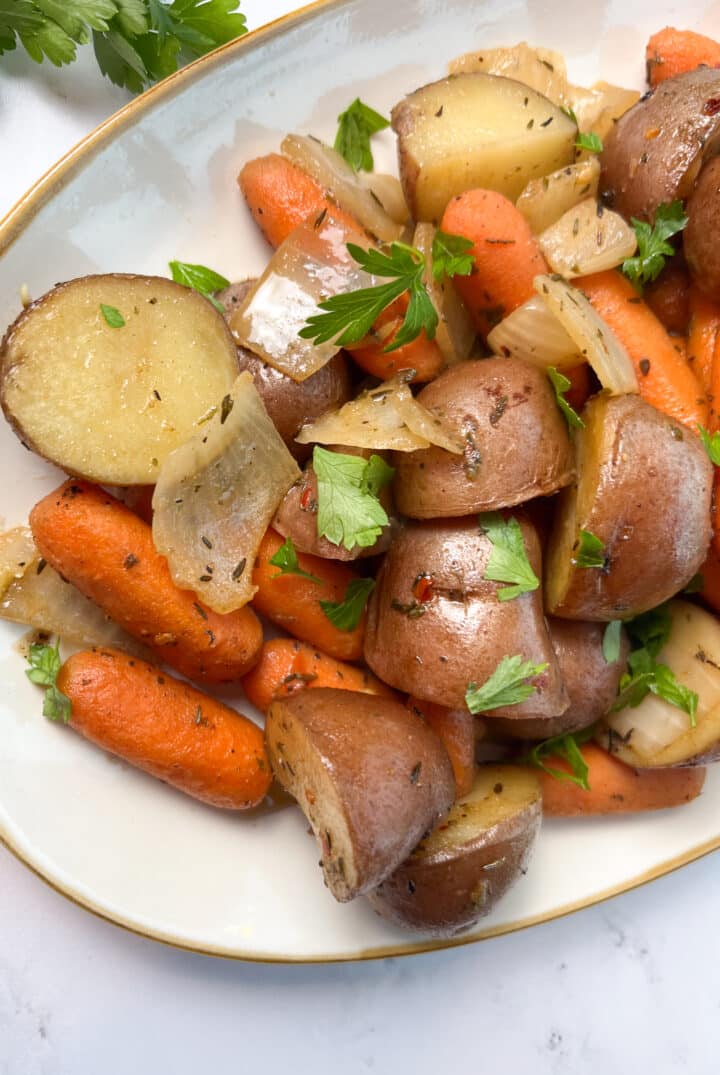
Cut size gives you a useful way to adjust the cooking time.
| Vegetable preparation | LOW setting | HIGH setting | Expected texture |
|---|---|---|---|
| ½-inch pieces | 3–5 hours | 2–3 hours | Very soft; may break apart |
| 1-inch cubes or slices | 5–7 hours | 3–4 hours | Tender and mostly intact |
| 2-inch chunks | 6–8 hours | 4–5 hours | Tender with a firm shape |
| Whole small potatoes | 6–8 hours | 4–5 hours | Soft when pierced |
| Whole large potatoes | 8–10 hours | 5–6 hours | Tender if the cooker is not crowded |
| Large carrot sections | 6–8 hours | 4–5 hours | Soft but sturdy |
These are practical ranges, not guarantees. Slow cookers differ in heating speed, and recipes with meat or thick sauces may change the result.
For the most even texture, cut carrots slightly thinner than potatoes. Carrots often remain firm longer because they are dense and fibrous. If the potatoes are much larger than the carrots, the potatoes may still be hard while the carrots are already soft.

Should You Cook Potatoes and Carrots on LOW or HIGH?
Use LOW when you have 6 to 8 hours and want a gentle, even cook. This setting works well for beef stew, pot roast, chicken dishes, and soups.
Use HIGH when you need the meal in about 3 to 4 hours. Check the vegetables early, especially if they are cut into small pieces. High heat can make the outer edges soft before the centers are fully tender.
LOW is not always better for texture. A long cook can cause potatoes to split or crumble, while carrots may become very soft. If you want vegetables that stay intact, use large pieces and begin testing after about 5 to 6 hours on LOW.
A useful rule is:
- Tender vegetables for soup: LOW for 7–8 hours
- Firm vegetables for stew: LOW for 5–7 hours
- Small pieces: Check sooner
- Whole potatoes: Allow more time
When Should You Add Potatoes and Carrots?
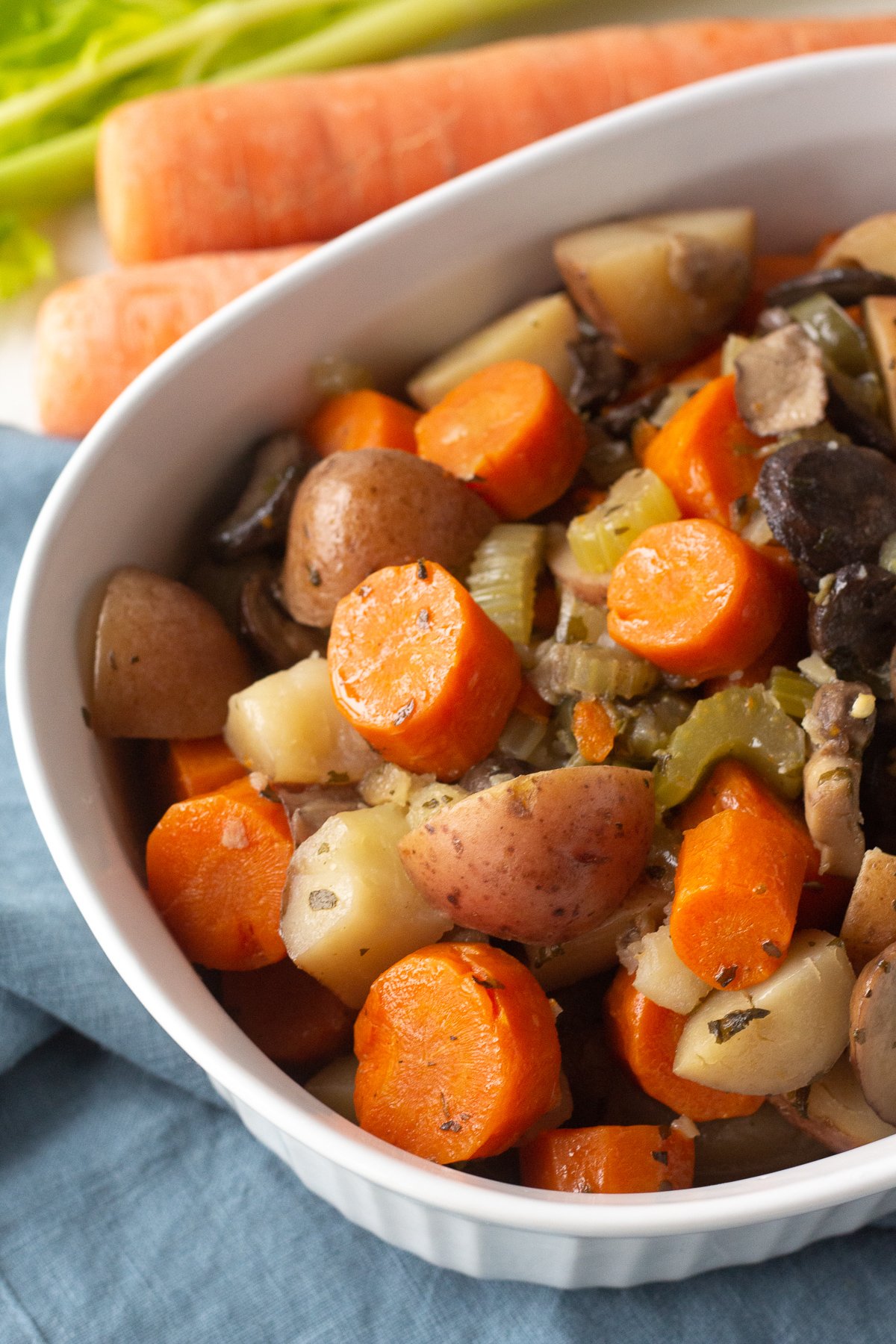
For most slow cooker meals, add potatoes and carrots at the beginning. They need time to soften, and early cooking lets them absorb flavor from the broth, sauce, herbs, and meat.
Add them later only when the recipe calls for a shorter cooking time or when you want firmer vegetables. For example, you can add 1-inch carrot slices during the final 2 to 3 hours on LOW. This method works best when the main food needs a long cooking time but you do not want the vegetables to become very soft.
Avoid adding raw vegetables during the final 30 minutes and expecting them to become tender. They may warm through but remain hard in the center.
If you use delicate vegetables, such as peas, green beans, or zucchini, add them near the end. They cook much faster than potatoes and carrots.
How Much Liquid Do Potatoes and Carrots Need?
Use the liquid listed in your recipe rather than covering the vegetables completely. Slow cookers lose little moisture because the lid traps steam, so adding too much liquid can make a stew thin or dilute its flavor.
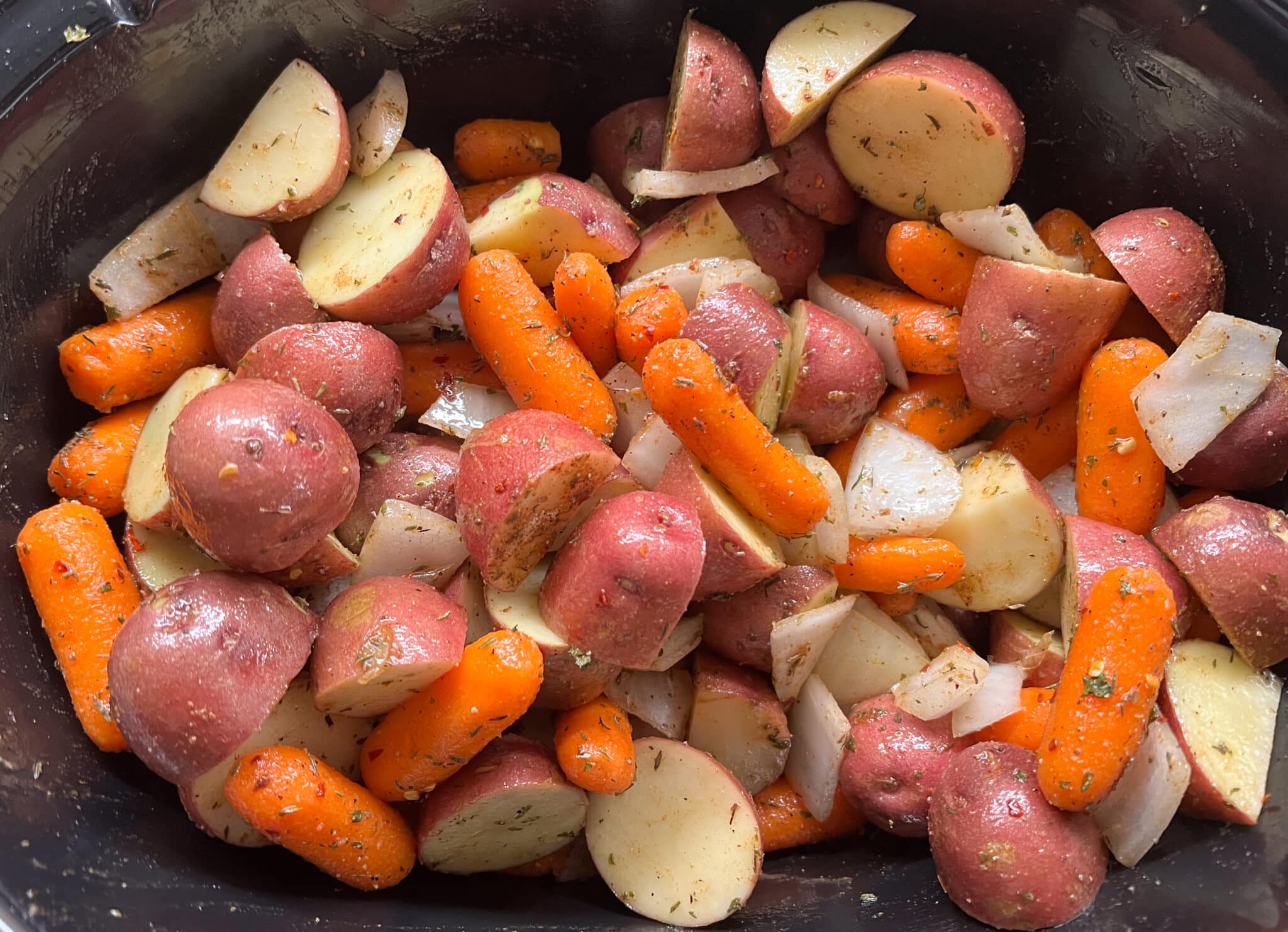
Broth, water, tomato sauce, gravy, and coconut milk can all work, depending on the dish. The liquid should usually reach partway up the ingredients. Potatoes and carrots soften through heat and steam, so they do not need to float in liquid.
Be careful with thick sauces. A very thick mixture may heat more slowly than a thin broth. If the food looks dry during cooking, do not repeatedly remove the lid. Check the recipe’s liquid ratio first, then add a small amount of hot broth or water if needed.
Do not fill the slow cooker to the top. USDA guidance recommends filling a slow cooker about one-half to two-thirds full so food heats properly and cooks evenly.

How to Tell When Potatoes and Carrots Are Done
The most reliable test is to pierce the largest piece with a fork.
Potatoes and carrots are ready when:
- A fork enters the center easily.
- The piece feels soft but does not turn to paste.
- There is no hard or crunchy core.
- The vegetable has reached the texture your recipe needs.
For mashed potatoes, cook until the pieces break apart easily. For stew, stop when the vegetables are tender but still hold their shape. For soup, a slightly softer texture may be desirable because the vegetables can continue to soften as the soup rests.
Do not judge doneness by color alone. Carrots may look bright orange before they are tender, and potatoes can appear cooked on the outside while remaining firm inside.
What to Do If the Potatoes or Carrots Are Still Hard
If the vegetables are still firm, keep the lid on and continue cooking.
- On LOW, cook for another 30 to 60 minutes.
- On HIGH, cook for another 20 to 30 minutes.
- Test the largest pieces again.
- If the slow cooker seems unusually cool, transfer the food to a covered pot on the stovetop and finish cooking there.
Do not switch repeatedly between settings or lift the lid often. Both actions make the cooking time harder to predict.
If the meat is already done but the vegetables are hard, remove the meat and keep it covered. Continue cooking the vegetables in the slow cooker or finish them on the stovetop. This helps prevent the meat from drying out while the root vegetables soften.
If the vegetables are falling apart, the next batch should use larger pieces or a shorter cooking time. You can also add carrots later in the process.

How to Prevent Mushy Potatoes and Carrots
To keep the vegetables from becoming mushy:
- Cut potatoes and carrots into larger, even pieces.
- Use LOW instead of HIGH when time allows.
- Avoid cooking far beyond the recipe’s stated time.
- Choose waxy or all-purpose potatoes for dishes where pieces must hold their shape.
- Add carrots during the later part of cooking if your recipe has a very long cook time.
- Stir only when necessary.
Russet potatoes contain more starch and can break down more easily during long cooking. Yukon Gold potatoes tend to become creamy while still holding their shape reasonably well. Red potatoes and other waxy varieties often stay intact longer.
The best potato depends on the dish. Use russets for a soft, thick stew or mash-like texture. Use Yukon Gold or red potatoes when you want recognizable chunks.

Slow Cooker Safety for Potatoes, Carrots, and Meat
Potatoes and carrots are low-risk vegetables when handled properly, but slow cooker meals often contain meat. Meat safety must be judged by internal temperature, not by vegetable tenderness.
Follow these basic practices:
- Thaw meat in the refrigerator before placing it in the slow cooker.
- Start the slow cooker soon after adding the ingredients.
- Keep the lid on during cooking.
- Do not use a slow cooker to reheat leftovers.
- Reheat leftovers on the stovetop, in the oven, or in a microwave until steaming hot, then transfer them to the slow cooker if needed for serving.
- Refrigerate leftovers within 2 hours, or within 1 hour if the room is above 90°F.
- Use a food thermometer for meat and poultry.
The USDA states that poultry should reach 165°F. Ground meats should reach 160°F, while whole cuts of beef, pork, veal, and lamb should reach at least 145°F, followed by a 3-minute rest. Follow the current USDA guidance and the specific requirements for the food in your recipe.
Vegetable tenderness does not prove that meat is safe, and a cooked-looking meal may still need more time.

Common Mistakes That Change Cooking Time
Cutting the vegetables unevenly
Small pieces soften first. Large pieces may still be hard when the small pieces begin to break down. Keep the cuts close in size.
Overfilling the crock
An overfilled slow cooker may heat slowly and cook unevenly. Keep the contents within the manufacturer’s fill range, generally about one-half to two-thirds full.
Opening the lid too often
Steam and heat escape each time you lift the lid. Check only when needed, preferably near the expected finish time.
Adding frozen vegetables or meat
Frozen ingredients lower the temperature of the food. Frozen vegetables may need extra time, while frozen meat can create a food-safety problem. Thaw meat first.
Using too much acid too early
Tomatoes, vinegar, wine, and other acidic ingredients can affect how some vegetables soften. They do not always prevent cooking, but a very acidic dish may need extra time. If the vegetables remain firm, continue cooking and test again.
Treating every slow cooker as the same
A small cooker, a large cooker, an older model, and a modern cooker may heat at different rates. Use the time range as a starting point and confirm the texture with a fork.

Example Slow Cooker Potato and Carrot Schedule
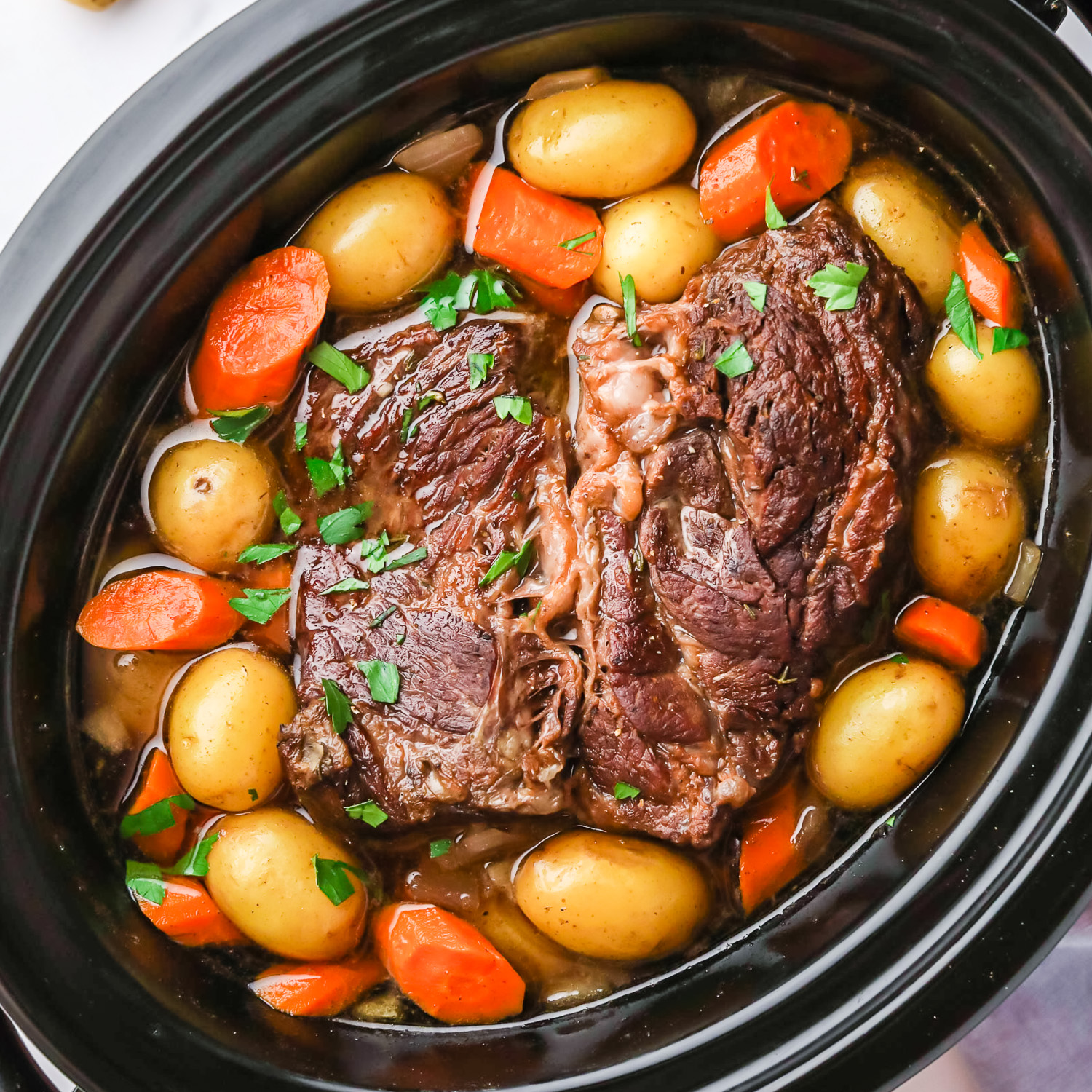
For a beef stew with 1- to 2-inch potato chunks and carrot pieces:
- Add the potatoes and carrots to the slow cooker.
- Add the beef, broth, seasonings, and other ingredients.
- Cover and cook on LOW for 6 to 8 hours.
- Check the largest potato at about 6 hours.
- Continue cooking if the center is firm.
- Check the beef with a food thermometer or follow the recipe’s safe-temperature instructions.
- Serve when the vegetables are fork-tender and the meat is safe and tender.
For a faster version, cook the same type of meal on HIGH for about 3 to 4 hours. If the pieces are large or the crock is full, allow additional time.
This schedule is an example, not a replacement for the recipe’s instructions. The recipe may use a different amount of liquid, a different cut of meat, or a different slow cooker size.
Key Takeaways
- Cook potatoes and carrots for 6–8 hours on LOW or 3–4 hours on HIGH.
- Cut the vegetables into similar 1- to 2-inch pieces for even cooking.
- Put dense vegetables near the bottom of the slow cooker.
- Test the largest piece with a fork rather than relying only on time.
- Use larger pieces, LOW heat, and shorter cooking times to prevent mushiness.
- Thaw meat before slow cooking and check meat with a food thermometer.
- Keep the slow cooker about one-half to two-thirds full.
Frequently Asked Questions
Can I cook raw potatoes and carrots in a slow cooker?
Yes. Raw potatoes and carrots can go directly into the slow cooker. Wash them first, cut them into even pieces, and cook them until a fork enters the largest piece easily.
Do potatoes or carrots take longer to cook?
Potatoes and carrots have similar cooking times when cut to the same size. Large carrots can remain firm because they are dense, while small potato pieces may soften faster. Cut both vegetables evenly and test the largest pieces.
Can I cook potatoes and carrots without liquid?
A small amount of liquid is usually best. Slow cookers rely on trapped steam and moist heat, but completely dry cooking can lead to sticking or uneven softening. Follow the recipe’s liquid instructions.
Why are my slow cooker potatoes still hard?
The pieces may be too large, the cooker may be overfilled, or the meal may need more time. Keep the lid closed and cook for another 30 to 60 minutes on LOW. If the cooker is not heating properly, finish the food on the stovetop.
Can I put potatoes and carrots in a slow cooker with frozen meat?
Do not place frozen meat in a slow cooker. Thaw the meat in the refrigerator first, then cook it with the vegetables. Frozen vegetables alone can be used in some recipes, but they may extend the cooking time.
Conclusion
For most American slow cooker recipes, potatoes and carrots need 6 to 8 hours on LOW or 3 to 4 hours on HIGH. Even cuts, enough liquid, a properly filled crock, and a fork test will give you a better result than using time alone.
Start with the recipe’s recommended setting, check the largest vegetable near the early end of the time range, and continue cooking until the center is tender.