
A 3- to 4-pound Boston butt usually takes 8 to 10 hours on LOW in a slow cooker. A 5- to 6-pound roast usually takes 10 to 12 hours on LOW. On HIGH, most Boston butts take about 5 to 7 hours, depending on size and the slow cooker.
For pulled pork, do not rely on time alone. Cook until the pork is very tender and reaches about 195°F to 205°F for easy shredding. The USDA lists 145°F with a 3-minute rest as the minimum safe temperature for whole cuts of pork, but pork must cook much longer to become tender enough for pulled pork.
Introduction
Boston butt, also called pork butt or pork shoulder, is a well-marbled cut commonly used for pulled pork in the United States. Despite its name, it does not come from the rear of the pig. It comes from the upper shoulder.
The slow cooker works well because its moist, steady heat slowly softens connective tissue. This makes a tough roast tender, juicy, and easy to shred. For the best result, plan for a full day of cooking on LOW rather than trying to rush a large roast.

Boston Butt Slow Cooker Time Chart
The chart below gives practical starting points for a thawed Boston butt. Actual cooking time can vary by roast shape, bone size, slow cooker model, and how often the lid is opened.
| Boston butt size | LOW setting | HIGH setting | Approximate servings |
|---|---|---|---|
| 2 to 3 pounds | 6 to 8 hours | 4 to 5 hours | 4 to 6 |
| 3 to 4 pounds | 8 to 10 hours | 5 to 6 hours | 6 to 8 |
| 4 to 5 pounds | 9 to 11 hours | 6 to 7 hours | 8 to 10 |
| 5 to 6 pounds | 10 to 12 hours | 7 to 8 hours | 10 to 12 |
| 6 to 8 pounds | 11 to 13 hours | 8 to 10 hours | 12 or more |
These times are estimates, not guarantees. A long, narrow roast may finish sooner than a short, thick roast of the same weight. Bone-in pork may also need more time than a boneless roast.
Best general rule: Cook Boston butt on LOW until a fork or meat probe slides into the meat with little resistance. For pulled pork, the meat should usually be around 195°F to 205°F.
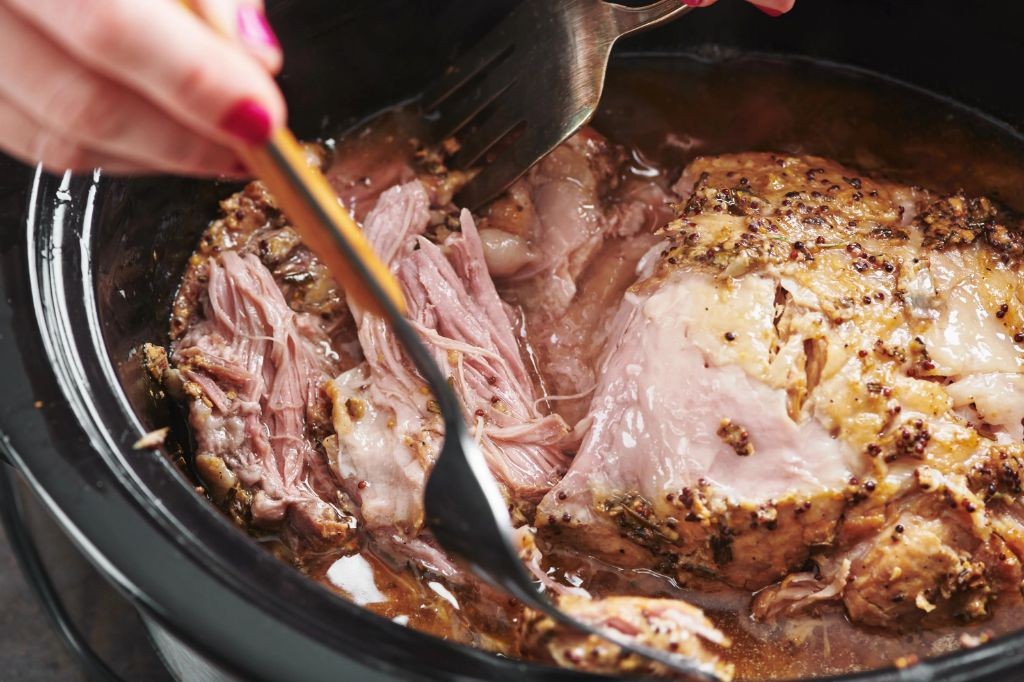
How to Cook Boston Butt in a Slow Cooker
Follow these steps for tender, shreddable pork.
1. Thaw the pork safely
Thaw the Boston butt in the refrigerator before cooking. A large roast may need one to two days to thaw fully.
Do not put a frozen roast into a slow cooker. The meat may remain in the food-safety danger zone too long while the center warms. The USDA recommends thawing meat in the refrigerator, cold water, or a microwave before cooking.
2. Trim excess fat
Leave a thin layer of fat for flavor and moisture, but trim off thick, hard fat. A large fat cap may not melt completely during slow cooking.
Place the roast fat-side up or fat-side down. This choice has a smaller effect than the cooking time and final temperature. The most important factors are a properly thawed roast, a covered cooker, and enough time.
3. Add seasoning and liquid
Coat the pork with salt, pepper, paprika, garlic powder, onion powder, or your preferred barbecue seasoning. You can also add brown sugar, chili powder, or dried herbs.
Add about ½ to 1 cup of liquid for a typical 4- to 6-quart slow cooker. Water, broth, apple juice, vinegar-based sauce, or a mixture can work. The liquid should not cover the pork. Boston butt releases its own juices as it cooks.
4. Fill the slow cooker correctly
Place the pork in a slow cooker that is about half to two-thirds full. This helps the cooker heat the food properly.
If the roast is too large for the pot, do not force the lid closed. Cut the roast into two large pieces, use a larger cooker, or choose a smaller roast.
5. Cook with the lid on
Set the slow cooker to LOW for the most reliable texture. Keep the lid closed during cooking. Each time the lid is lifted, heat escapes and cooking may take longer.
For a 4- to 5-pound Boston butt, start checking after about 8 hours on LOW. For a 5- to 6-pound roast, begin checking around 10 hours.
6. Check temperature and tenderness
Insert an instant-read thermometer into the thickest part of the meat without touching the bone. Check several spots if the roast has an irregular shape.
The pork is safe at 145°F after a 3-minute rest, according to the USDA. However, it will not usually shred well at that temperature.
For pulled pork, continue cooking until:
- The internal temperature is about 195°F to 205°F.
- A fork or thermometer probe enters easily.
- The meat pulls apart with little effort.
- The bone, if present, wiggles or comes out easily.
7. Rest and shred the pork
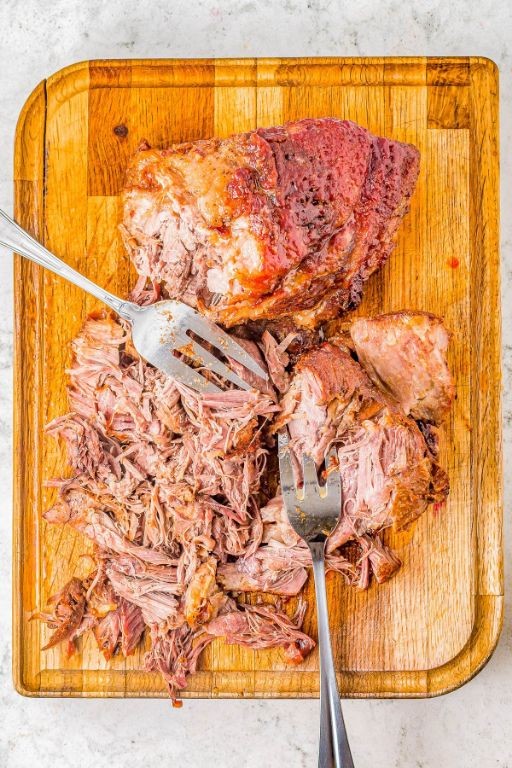
Move the cooked pork to a tray or large bowl. Let it rest for 20 to 30 minutes before shredding.
Remove the bone, if needed, and pull the pork apart with two forks or clean, heat-safe shredding claws. Discard large pieces of fat. Mix some of the cooking liquid back into the meat to improve moisture and flavor.

LOW Versus HIGH: Which Slow Cooker Setting Is Better?
Use LOW when you have enough time. It generally gives the connective tissue more time to soften and makes it easier to avoid dry edges.
Use HIGH when you need the pork sooner. A Boston butt can become tender on HIGH, but the cooking window is narrower. Start checking early because some slow cookers run hotter than others.
| Setting | Main benefit | Main risk |
|---|---|---|
| LOW | More forgiving and ideal for overnight or daytime cooking | Requires more planning |
| HIGH | Finishes sooner | Can dry the outside if cooked too long |
Do not start on HIGH and switch to LOW based only on the clock. The total cooking time still depends on the roast’s size and tenderness. If you switch settings, use the thermometer and texture as your guide.
What Temperature Should Boston Butt Reach?
The minimum safe temperature and the best shredding temperature are different.
A whole pork roast is safe at 145°F, followed by a 3-minute rest, under USDA guidance. That temperature applies to safety, not to the soft texture expected from pulled pork.
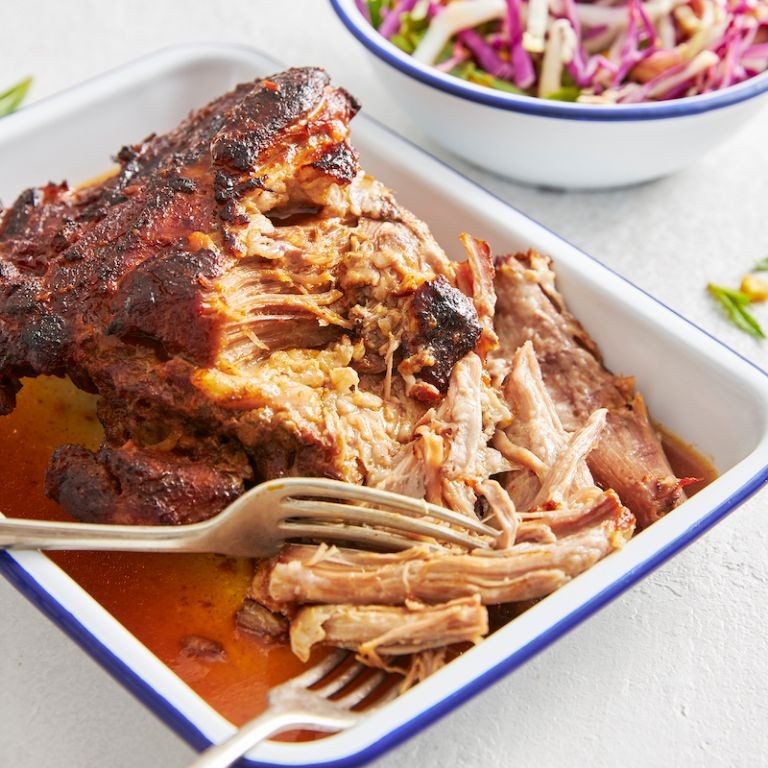
Boston butt contains collagen and connective tissue. Extended cooking changes that tough tissue into gelatin, which gives pulled pork its soft texture. This is why a roast can be safe to eat but still feel firm when it reaches 160°F or 170°F.
For sliced pork, you may stop closer to the safe minimum if the texture suits you. For pulled pork, continue cooking until the meat is tender, often between 195°F and 205°F.
Temperature readings can vary within one roast. Test the thickest sections and use tenderness as the final sign of doneness.

Do You Need to Sear Boston Butt First?
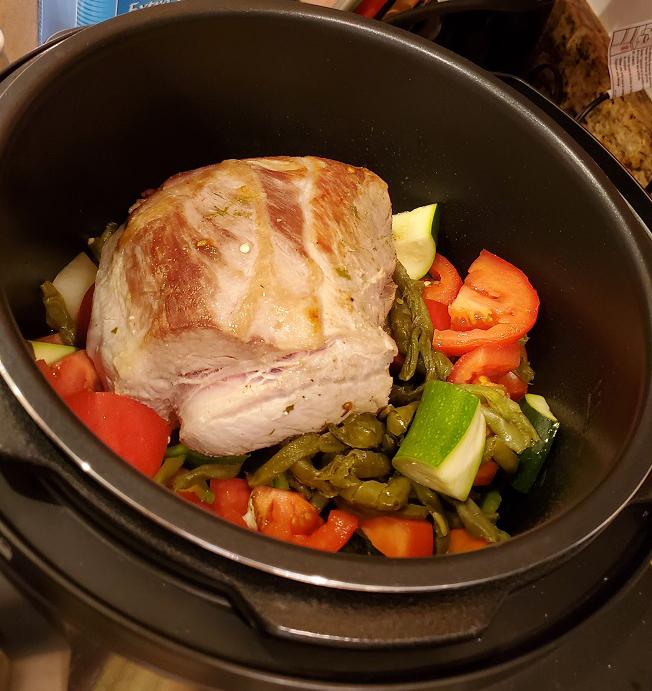
Searing is optional. Browning the pork in a hot skillet before slow cooking can add roasted flavor through the Maillard reaction, but it does not make the meat safer or guarantee more moisture.
To sear:
- Pat the pork dry.
- Heat a small amount of oil in a heavy skillet.
- Brown each large side for about 2 to 4 minutes.
- Transfer the pork to the slow cooker.
Skip searing when convenience matters more than extra browning. A seasoned roast cooked directly in the slow cooker can still produce tender pulled pork.
How Much Liquid Should You Add?
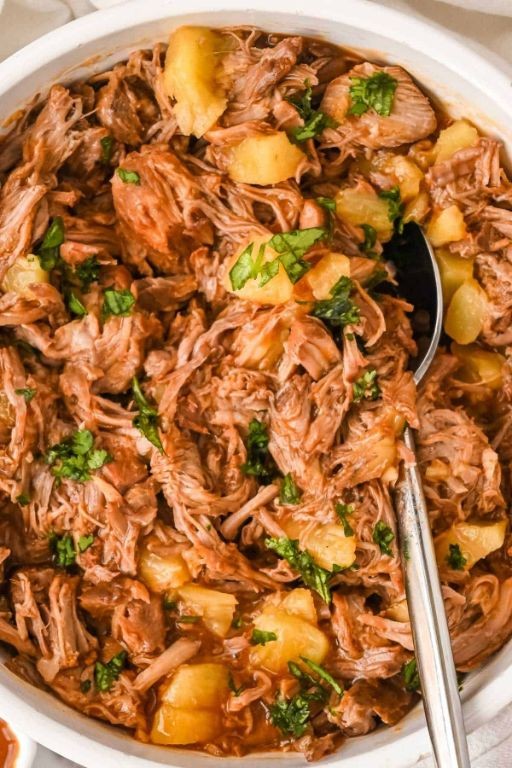
Use enough liquid to create a moist cooking environment, but do not drown the pork. For most Boston butts, ½ to 1 cup is a useful starting range.
Too much liquid can dilute the flavor and make the finished pork watery. Too little liquid is usually not a serious problem because the roast releases moisture, but a very lean roast may benefit from some broth or sauce.
Do not use barbecue sauce as the only liquid if it contains a lot of sugar. Sugar can scorch around the edges, especially on HIGH. Add part of the sauce during cooking and toss the shredded pork with the rest at the end if you want a stronger barbecue flavor.

How to Tell When the Pork Is Done
The best sign is probe tenderness, not a specific number of hours.
Check the pork when it reaches about 195°F. If a thermometer probe slides into the roast like soft butter, it is likely ready. If the probe meets firm resistance, cover the cooker and continue cooking.
Other signs include:
- The roast separates easily when pressed with a fork.
- The meat pulls into strands instead of cutting into firm slices.
- The bone removes with little resistance.
- The pork has released a large amount of juice and fat.
Do not judge doneness by color alone. Pork can remain pink near the bone even when it is fully cooked, and color does not measure tenderness or safety.
What to Do if the Boston Butt Is Tough
A tough Boston butt usually needs more time, not less liquid. Return the lid to the slow cooker and cook for another 30 to 60 minutes, then test again.
Common causes include:
- The roast has not cooked long enough for the connective tissue to soften.
- The roast is unusually thick.
- The slow cooker is larger or cooler than expected.
- The lid was opened often.
- The meat was sliced before it became shreddable.
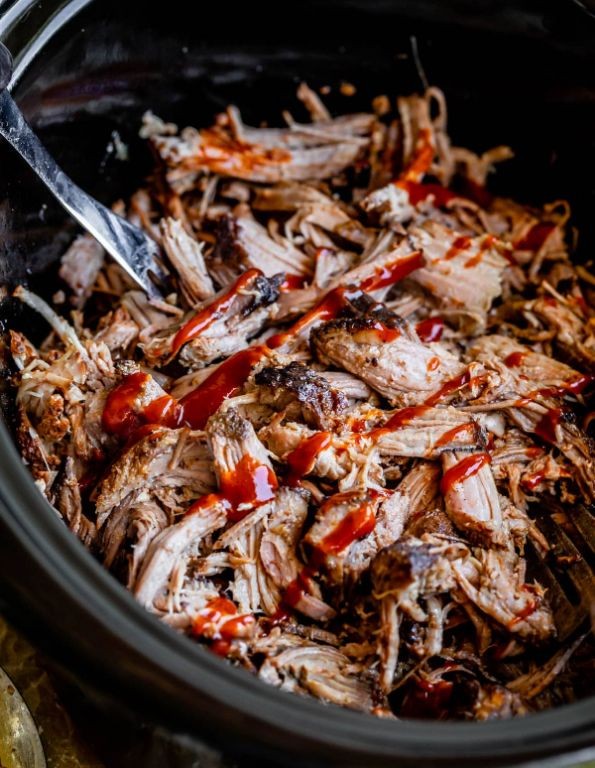
If the pork is dry but tender, stir in a small amount of reserved cooking liquid, broth, or barbecue sauce. If it is still firm, continue cooking. Adding sauce cannot replace the time needed to break down connective tissue.
How to Store and Reheat Slow Cooker Pork
Refrigerate leftover pork within 2 hours of cooking. If the room temperature is above 90°F, refrigerate it within 1 hour. Store the pork in shallow containers so it cools quickly.
The USDA recommends using refrigerated leftovers within 3 to 4 days. Freeze pulled pork in airtight containers or freezer bags for longer storage.
To reheat, warm the pork with a little broth or cooking liquid until it reaches 165°F. Reheat only the amount you plan to eat. A covered saucepan, oven, or microwave can work; stir the pork during microwave heating so it warms evenly.
Common Mistakes to Avoid
Cooking a frozen roast
A slow cooker is not a safe way to thaw meat. Thaw the Boston butt first in the refrigerator.
Using the wrong cooker size
An overfilled cooker may heat slowly. An underfilled cooker may cook the meat too quickly or dry it out. Aim for a fill level of about half to two-thirds.
Opening the lid repeatedly
Opening the lid releases heat and extends the cooking time. Check the pork only when it is near the estimated finish time.
Stopping at 145°F for pulled pork
The roast may be safe at 145°F but still too firm to shred. Cook longer for the texture you want.
Adding too much sauce
A large amount of sauce can make the pork overly salty or watery. Start with a modest amount and add more after shredding.
Leaving leftovers in the cooker
A slow cooker can keep food warm for a limited period, but it is not a substitute for prompt refrigeration. Move leftovers to shallow containers and chill them soon after the meal.
Frequently Asked Questions
Can I cook a Boston butt overnight in a slow cooker?
Yes. LOW is usually the better setting for overnight cooking. Use a thawed roast, avoid overfilling the cooker, and confirm tenderness in the morning. Refrigerate leftovers soon after serving.
Is it better to cook Boston butt on LOW or HIGH?
LOW is usually better when you want a wider margin for timing and a tender pulled-pork texture. HIGH works when time is limited, but check the roast earlier because slow cookers vary.
Should I put the fat side up or down?
Either position can work. Fat-side up may let rendered fat run over the roast, while fat-side down can shield the meat from direct heat. The cooker’s heat pattern matters more than the position.
Can I cook Boston butt without liquid?
You can use very little liquid because pork releases moisture as it cooks. Still, ½ to 1 cup of broth, water, juice, or sauce can help create a moist environment and provide liquid for serving.
Can I leave the pork in the slow cooker after it is done?
Keep it hot only for a short serving period and follow the slow cooker manufacturer’s instructions. For storage, transfer the pork to shallow containers and refrigerate it within the USDA time limits.
Conclusion
For most Boston butts, plan on 8 to 10 hours on LOW for a 3- to 4-pound roast and 10 to 12 hours on LOW for a 5- to 6-pound roast. Use HIGH when needed, but begin checking sooner.
The final decision should come from temperature and texture. For pulled pork, cook until the roast reaches roughly 195°F to 205°F and a probe slides in easily. Thaw the pork first, keep the lid closed, rest the meat before shredding, and refrigerate leftovers promptly.