
A 3- to 4-pound leg of lamb usually takes 6 to 8 hours on LOW in a slow cooker. On HIGH, plan on 3 to 4 hours. The lamb is ready when the thickest part reaches at least 145°F, followed by a 3-minute rest, according to the USDA.
Time alone is not enough. The size, bone, starting temperature, slow cooker, and desired texture all matter. Use a meat thermometer to check the center of the roast.

Slow Cooker Leg of Lamb Cooking Times
Use the table below as a starting guide. These times apply to a thawed leg of lamb placed in a preheated slow cooker.
| Leg of lamb size | LOW setting | HIGH setting | Best use |
|---|---|---|---|
| 2 to 3 pounds | 5 to 6 hours | 3 to 4 hours | Sliced lamb |
| 3 to 4 pounds | 6 to 8 hours | 4 to 5 hours | Sliced or tender lamb |
| 4 to 5 pounds | 7 to 9 hours | 5 to 6 hours | Tender, sliceable lamb |
| 5 to 6 pounds | 8 to 10 hours | 6 to 7 hours | Very tender lamb |
These are estimates, not guarantees. A boneless leg may cook faster than a bone-in leg of the same weight. A crowded slow cooker may also need more time.
For the best texture, cook the lamb on LOW when possible. The lower setting gives the meat more time to soften without exposing the outside to as much heat.

The Right Internal Temperature for Lamb
The USDA recommends cooking whole cuts of lamb to a minimum internal temperature of 145°F, then resting the meat for at least 3 minutes. This temperature applies to lamb roasts, steaks, and chops.
Insert the thermometer into the thickest part of the leg. Avoid touching the bone, because the bone can give a false reading. Check more than one spot if the leg has an uneven shape.
Temperature also affects texture:
- 145°F: Safe after the required rest; the meat may be pink and firm.
- 160°F to 175°F: More cooked and usually firmer.
- 190°F to 205°F: Often very tender and pull-apart, but the lamb may become dry if overcooked.
A slow cooker can make lamb tender even after it passes 145°F. However, tenderness and food safety are different goals. Temperature confirms safety. Texture tells you when the roast is ready for the way you want to serve it.
The USDA advises thawing meat before placing it in a slow cooker. Frozen meat may stay too long in the bacterial “danger zone,” which is between 40°F and 140°F.
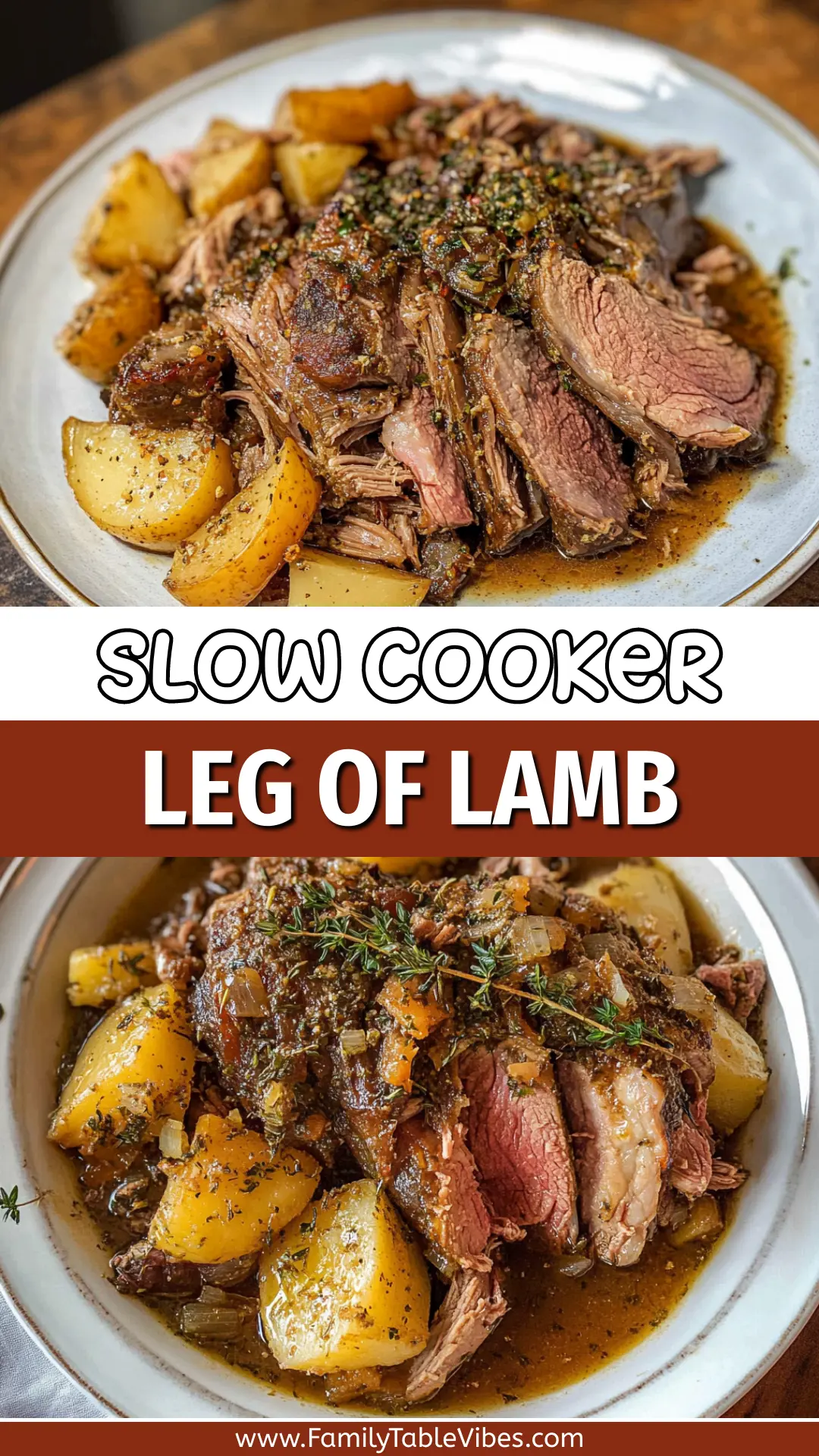
How to Cook a Leg of Lamb in a Slow Cooker
Follow these steps for a tender slow cooker leg of lamb.
1. Thaw the lamb safely
Thaw the leg in the refrigerator. A large roast may need one to two days to thaw fully.
Do not thaw the lamb on the counter. If you need a faster method, use the cold-water method and cook the lamb right away.
2. Trim excess fat
Remove thick pieces of surface fat, but leave a thin layer for flavor. Lamb fat adds richness, yet too much can make the cooking liquid greasy.
Pat the lamb dry with paper towels. Dry meat browns better if you sear it first.
3. Season the leg
A simple seasoning mix works well:
- Kosher salt
- Black pepper
- Minced garlic
- Rosemary
- Thyme
- Lemon zest
- Olive oil
Rub the seasoning over all sides. For deeper flavor, season the lamb several hours ahead and keep it covered in the refrigerator.
4. Sear it, if desired
Heat a skillet over medium-high heat. Add a small amount of oil, then brown the lamb on each side.
Searing is optional. It does not seal in juices, but it adds browned flavor and improves the color of the finished roast. If you skip this step, the lamb will still cook properly.
5. Add vegetables and liquid
Place sliced onions, carrots, or potatoes in the slow cooker. Set the lamb on top.
Add about ½ to 1 cup of liquid. Good choices include:
- Low-sodium beef or chicken broth
- Dry red wine mixed with broth
- Water with lemon juice
- Tomato-based cooking liquid
The liquid should not cover the lamb. A slow cooker traps steam, so the roast creates more cooking liquid as it cooks.
6. Cook with the lid closed
Set the slow cooker to LOW or HIGH. Avoid lifting the lid during the first several hours. Each lid lift can release heat and extend the cooking time.
For a 3- to 4-pound leg, start checking the temperature after about 5½ hours on LOW or 3½ hours on HIGH.
7. Check the thickest part
Use an instant-read thermometer. Insert it into the center of the thickest section.
Remove the lamb when it reaches your target temperature and texture. If it has reached 145°F but still feels firm, continue cooking until it becomes tender. Check it every 30 to 45 minutes so it does not dry out.
8. Rest before carving
Move the lamb to a cutting board. Cover it loosely with foil and rest it for 10 to 20 minutes.
Resting lets the juices settle. It also makes the roast easier to slice.

LOW or HIGH: Which Slow Cooker Setting Is Better?
LOW is usually the better setting for a leg of lamb. It gives the meat time to soften and reduces the risk of a dry outer layer.
Use HIGH when you have less time. The lamb may finish sooner, but the cooking window is smaller. Begin checking the temperature early.
The two settings do not always produce identical results. Slow cooker temperatures vary by brand, model, fill level, and age. A small cooker filled with a large roast may cook differently from a large cooker holding a smaller roast.
Keep the lid on during cooking. Do not use the slow cooker to hold the lamb for many extra hours after it becomes tender. Extended cooking can make the meat stringy and dry.
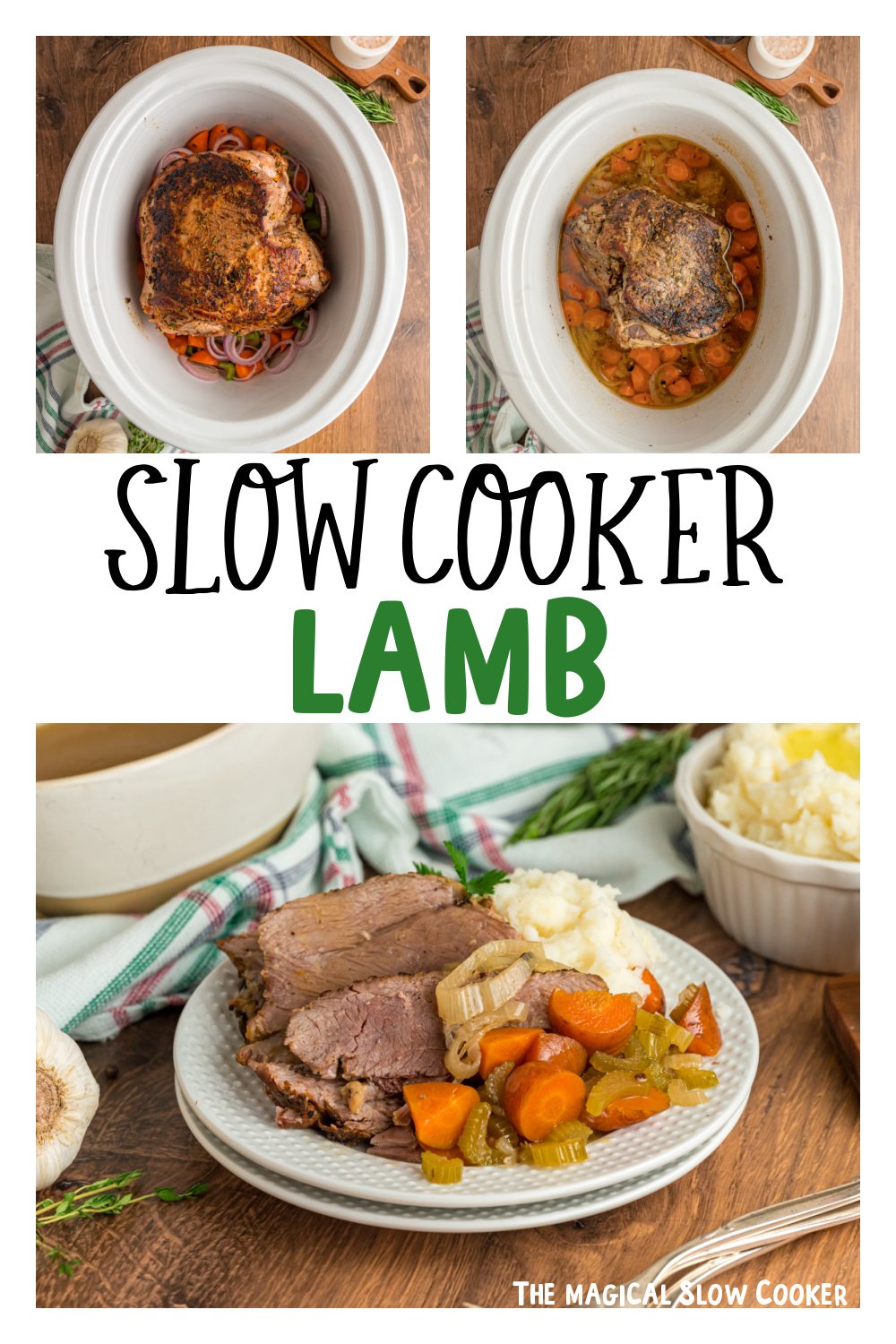
How Much Liquid Does Leg of Lamb Need?
A leg of lamb does not need to be submerged in liquid. Use enough liquid to create moisture and a sauce, usually ½ to 1 cup for a standard slow cooker.
Too much liquid can dilute the flavor. It can also make the lamb taste more like boiled meat than roasted meat.
Add vegetables under the lamb. They lift the meat from the bottom and absorb the cooking juices. Potatoes may become very soft after a long cook, so cut them into large chunks.
If you want a thicker sauce, remove the lamb when it is done. Strain the liquid, skim off excess fat, and simmer the liquid in a saucepan. You can also thicken it with a small amount of cornstarch mixed with cold water.
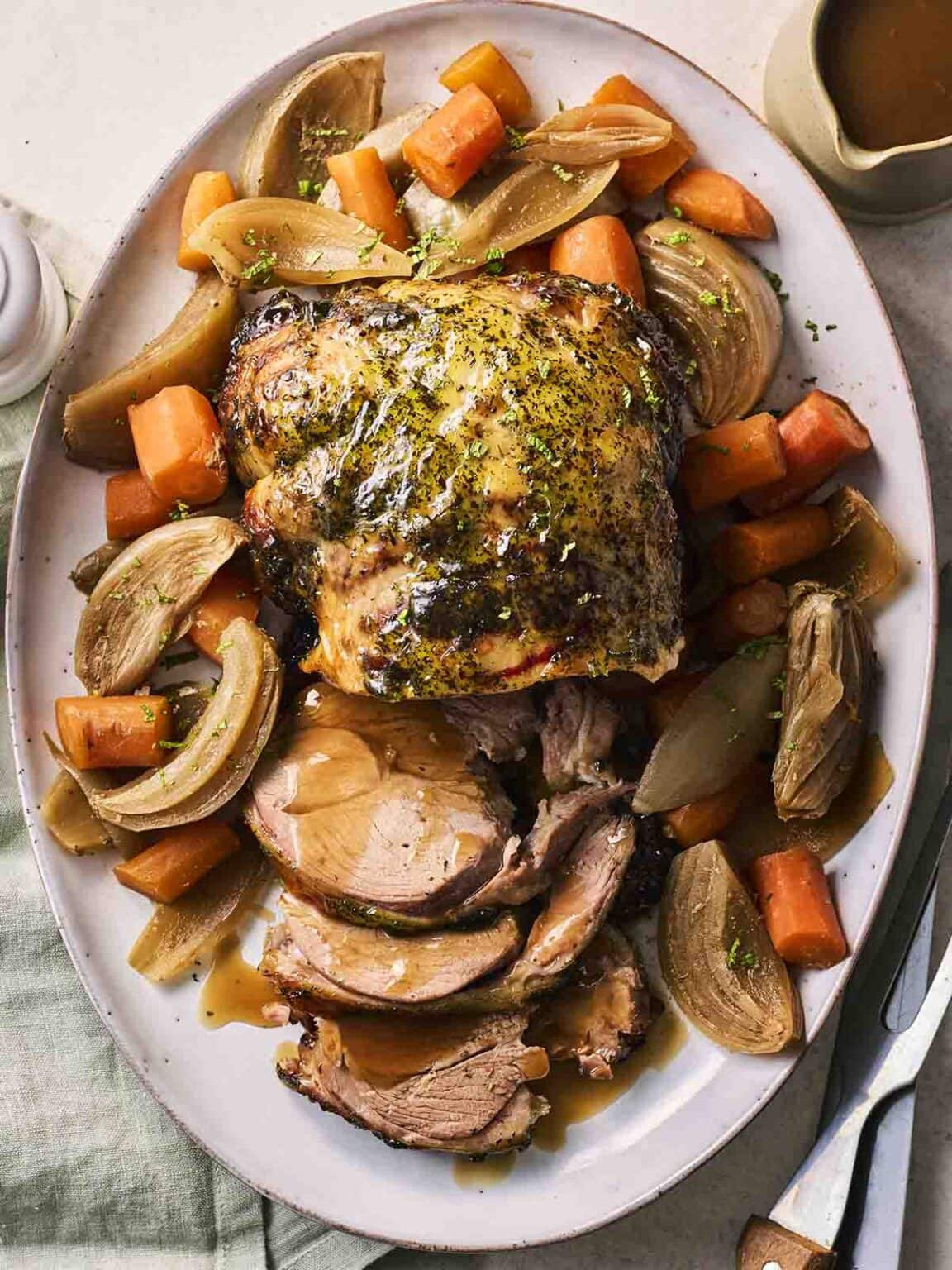
Bone-In vs. Boneless Leg of Lamb
A bone-in leg of lamb often has more flavor and may stay moist during a long cook. It can also take longer to cook and may be harder to fit into a small slow cooker.
A boneless leg cooks more evenly and is easier to carve. It may finish sooner, especially if it is tied into a compact shape. Keep the butcher’s string on during cooking unless the package instructions say otherwise.
Do not judge cooking time by weight alone. Shape matters. A long, thin roast can cook sooner than a short, thick roast with the same weight.
Choose a slow cooker that lets the lamb sit with space around it. The lid should close fully. If the roast presses against the lid, use a larger cooker.

Sliced Lamb or Fall-Apart Lamb?
Your desired texture changes the cooking time.
For sliceable lamb
Cook until the center reaches at least 145°F, then rest the lamb. This produces meat that can be sliced across the grain.
For a 3- to 4-pound roast, this may take around 5 to 7 hours on LOW. Start checking early, because a smaller or boneless roast may finish sooner.
For pull-apart lamb
Cook the leg longer, often 8 to 10 hours on LOW, until a fork slides into the meat with little resistance.
Pull-apart lamb usually reaches a much higher internal temperature than the USDA minimum. That can soften connective tissue, but it can also dry out lean parts of the leg.
A shoulder roast is often a better choice than a leg when you want shredded lamb. The shoulder contains more connective tissue and fat, which suit long, slow cooking.
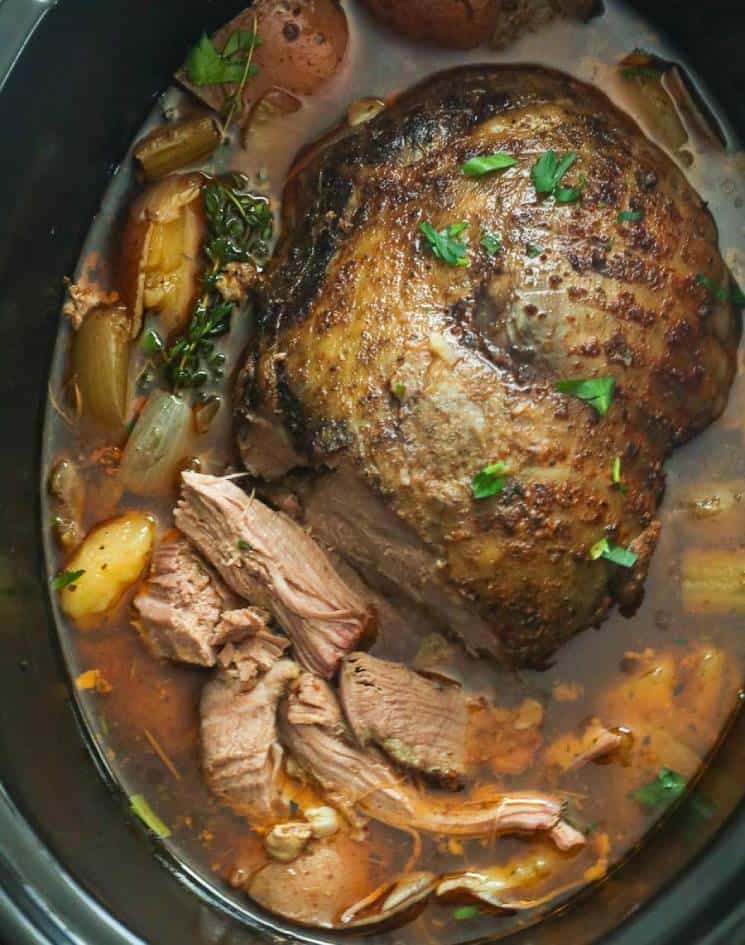
Signs That Leg of Lamb Is Done
Use temperature, texture, and appearance together.
The lamb is likely ready when:
- The thickest part has reached your selected temperature.
- A thermometer gives a stable reading in several spots.
- A knife or fork enters the meat with little resistance.
- The juices are hot and the meat has a tender feel.
- The vegetables are soft enough for serving.
Color is not a reliable safety test. Lamb can remain pink after it reaches a safe temperature. It can also look brown before it is fully cooked.
If the lamb is tough, it often needs more time rather than less. Continue cooking on LOW and check it again after 30 to 45 minutes.
If the lamb is dry, it may have cooked too long, started too small, or had too little fat. Serve it with the cooking juices, gravy, or a yogurt-based sauce.

Common Slow Cooker Mistakes
Starting with frozen lamb
Frozen lamb may heat too slowly. Thaw it in the refrigerator first.
Using too much liquid
The slow cooker already holds moisture. Excess liquid can weaken the flavor and prevent the lamb from developing a rich sauce.
Filling the cooker too tightly
A crowded cooker can slow heating. The lamb should fit without forcing the lid open.
Opening the lid often
Each time the lid comes off, heat escapes. Check the lamb only when needed.
Relying on time alone
A recipe may say six hours, but slow cookers vary. Use the time as a guide and confirm the center with a thermometer.
Cutting the lamb right away
Hot juices may run onto the cutting board. Rest the lamb before carving.
Cooking at room temperature
Do not leave raw lamb at room temperature for long periods. Keep it refrigerated until preparation.
Leaving leftovers in the cooker
Transfer leftovers to shallow containers. Refrigerate them within two hours. Reheat them until hot before serving.

How to Store and Reheat Leftover Lamb
Refrigerate cooked lamb within two hours. If the room temperature is above 90°F, refrigerate it within one hour.
Store the lamb in a sealed container. Use refrigerated leftovers within 3 to 4 days, following USDA food safety guidance. Freeze leftovers if you will not eat them in that period.
To keep slices moist, reheat them with a little broth or cooking juice. Cover the dish and heat until the lamb is hot throughout.
For pulled lamb, reheat it in a saucepan over low heat or in the microwave with extra cooking liquid. Stir during microwave heating so the meat warms evenly.

Frequently Asked Questions
Can I cook a 2-pound leg of lamb in a slow cooker?
Yes. A 2-pound leg often takes about 5 to 6 hours on LOW or 3 to 4 hours on HIGH. Begin checking the temperature early because smaller roasts can finish quickly.
Should I brown lamb before slow cooking?
Browning is optional. It adds roasted flavor and better color, but it does not make the lamb safer or guarantee a juicier roast.
Can I put potatoes in with the lamb?
Yes. Cut potatoes into large pieces and place them beneath or around the lamb. They may become very soft during a long cook, especially after eight hours.
Why is my slow cooker lamb tough?
The lamb may not have cooked long enough for the connective tissue to soften. Continue cooking on LOW and check it again after 30 to 45 minutes. Toughness can also result from slicing with the grain.
Can I cook lamb overnight in a slow cooker?
You can cook it overnight if the slow cooker is in good working order and the lamb is thawed. Use LOW, keep the lid closed, and check the internal temperature when you wake up. Do not leave the cooked lamb on the warm setting for an unlimited time.
What cut is best for shredded lamb?
Lamb shoulder is usually better for shredding than leg. It has more fat and connective tissue, which support a long, slow cooking time.
Final Answer: How Long Does Leg of Lamb Take in a Slow Cooker?
For a typical 3- to 4-pound leg of lamb, cook it for 6 to 8 hours on LOW or 4 to 5 hours on HIGH. Check the thickest part with a thermometer. The lamb must reach at least 145°F, followed by a 3-minute rest for food safety.
For tender, sliceable lamb, remove it soon after it reaches the desired temperature. For fall-apart lamb, continue cooking until it becomes fork-tender, while checking often to avoid drying the meat.
The best next step is simple: thaw the lamb, season it, place it in the slow cooker with a small amount of liquid, and begin checking the internal temperature before the estimated finish time.